Preamble now shrunk to near-zero. (Translation: I lack the time or energy to justify only mostly liking The Joshua Tree.)
ALBUMS
Sign O’ the Times — Prince: The most musically expansive, exuberant album from the most musically gifted artist in all of modern pop, with the depth of perspective and feeling somehow matching the sonic range and command. (If we’re being honest, for the first time. And maybe the last.) In other words, not just his greatest musical tour de force, but also his smartest, funniest and wisest record. My favorite album of 1987? Probably my favorite album of any year.
Tunnel of Love — Bruce Springsteen: The antithesis of what people think about when they think about Bruce Springsteen, both coming and going. Not the anthemic rock-and-roll savior/bandleader. Not the Woody Guthrie-esque folk balladeer. Just a grown-ass man thinking hard about love and marriage. Side two is as fine a stretch of music as he’s ever released.
Paid in Full — Eric B. & Rakim: The apotheosis of hip-hop’s beat + rhymes foundation.
Pleased to Meet Me — The Replacements: Not as impossibly spirited as Let It Be or as perfectly sequenced as Tim, but this completes a three-album peak run in style. It’s got a higher floor than Tim (what’s the worst song here? “Red Red Wine”? “The Ledge”?) and maybe a higher ceiling too: “Can’t Hardly Wait” is even more the band’s great Memphis song than “Alex Chilton.”
Document — R.E.M.: There used to be a early rock-and-soul compilation series called Oldies But Goodies where each album was divided into a “Rockin’” side and “Dreamy” side. That’s kind of the story of R.E.M.’s career, alternating their Rockin’ (Monster, Life’s Rich Pageant) and Dreamy (Murmur, Out of Time) sides. Dreamy is probably their best and truest self, but this is the apex of R.E.M.’s rockin’ side. And I’ve come to think it’s their best album.
Soweto Never Sleeps: Classic Female Zulu Jive — Various Artists: Even if you’ve never heard this record and aren’t that familiar with South African pop, this sounds pretty much exactly like what you’d think something dubbed “Classic Female Zulu Jive” would sound like.
G-Man — Sonny Rollins: On its own terms, should probably be a little higher, but I’m such a jazz dabbler I don’t feel right putting up there. One of the jazz records I’ve played the most.
Louder Than Bombs — The Smiths: This singles comp, few (any?) of the songs found on studio albums, is probably the most durably pleasurable of the band’s records.
By the Light of the Moon — Los Lobos: An unavoidable step back, but still a pretty satisfying sequel to their debut-as-classic How Will the Wolf Survive.
Warehouse: Songs and Stories — Husker Du: Too big for hardcore from first contact, their mid-career peaks were both higher and broader, but they go out here as a great guitar-buzz pop band, 20 bracing if never quite indelible tunes rising and falling from a consistent hour-plus-long sea of sound.
King’s Record Shop — Rosanne Cash
Tallulah — The Go-Betweens
The Lonesome Jubilee — John Mellencamp
You’re Living All Over Me – Dinosaur Jr.
Yo! Bum Rush the Show — Public Enemy
Sister — Sonic Youth
Rhythm Killers — Sly and Robbie
The Joshua Tree — U2
Soul Survivor — Al Green
The People Who Grinned Themselves to Death — The Housemartins
How Ya Like Me Now — Kool Moe Dee
Substance — New Order
Flash Light — Tom Verlaine
Characters — Stevie Wonder
Trio — Dolly Parton, Linda Ronstadt and Emmylou Harris
SINGLES
“Bring the Noise” — Public Enemy
“I Could Never Take the Place of Your Man” — Prince
“Rebel Without a Pause” – Public Enemy
“Can’t Hardly Wait” — The Replacements
“If I Was Your Girlfriend” — Prince
“Right Next Door” — The Robert Cray Band
“U Got the Look”/”Housequake” — Prince
“I Ain’t No Joke” — Eric B. & Rakim
“It’s the End of the World as We Know It (And I Feel Fine)” — R.E.M.
I’ve had this list done for awhile, but couldn’t find time to put together a post. For the sake of getting back in this particular saddle, I’m going to post the list with minimal commentary and try to get back on track with regular listening/listing.
ALBUMS
Have Moicy! — Michael Hurley, the Unholy Modal Rounders and Jeffrey Fredericks & the Clamtones: Bicentennial, bicoastal, bohemian bluegrass and jug-band blues summit meeting as a self-contained hoodoo bash of love, death, food, crime sprees, trips to Paris, cunnilingus, backseat gophers and sundry other subjects. Recorded in two days and one of the most-played albums in my household over the past 20 years. Warning: You might hate this. Rallying cry: “Life is short. Art is long.”
The Wild Tchoupitoulas: The Wild Tchoupitoulas: By contrast: You will like this record. A sort of apotheosis of New Orleans music and one of the records I’m most likely to reach for in a group when I want something I’m sure everyone will enjoy.
The Ramones — The Ramones
Howlin’ Wind – Graham Parker: The missing link between Van Morrison and Elvis Costello.
Another Green World — Eno
Songs in the Key of Life — Stevie Wonder: With the possible exception of Wonder-inheritor Prince, there may not be a modern R&B musician who so fully absorbed the variety of the black music canon. If Songs in the Key of Life isn’t his best album — the consensus is that it is, but I slightly prefer both Innervisions and Talking Book — it’s the ultimate testament to his range and command across this culture.
The Modern Lovers — The Modern Lovers
Changesonebowie — David Bowie: I’ve always preferred Bowie one piece at a time, and this collects most of what I’d deem essential.
Night Moves — Bob Seger: All Chuck’s children are still out here playing his licks.
Kate & Anna McGarrigle — Kate & Anna McGarrigle
Heat Treatment — Graham Parker: A little bit harder, but also a little less memorable than the debut. A little.
On the Loose — Hi Rhythm: Al Green’s ace backing back doing its own thing while Green and Willie Mitchell are away, and breaking all the rules. This batch of freak-flag funk — sort of like Sly Stone’s There’s a Riot Goin’ On if it were motivated by playfullness instead of bitterness — starts with an anthem called “Black Rock,” ends with a bit of carnal comic relief called “Skinny Dippin’” and is both an oddball indulgence and a total charmer from beginning to end. But you’ll have to decide for youself whether the gently mocking “Superstar” is about Green.
Mothership Connection — Parliament
Marcus Garvey — Burning Spear
Alone Again— George Jones
In the Dark –Toots & the Maytals: I’ve seen four different years listed for this. It’s terrific whenever it came out and I’m just going to put it here.
Black and Blue — Rolling Stones
Full of Fire — Al Green
Station to Station — David Bowie
Blondie — Blondie
Collector’s Item — Harold Melvin & Blue Notes
Tryin’ Like the Devil — James Talley
Dr. Buzzard’s Original Savannah Band — Dr. Buzzard’s Original Savannah Band
Midnight Son — Son Seals
Gimme Back My Bullets — Lynyrd Skynyrd
SINGLES
“Gloria” — Patti Smith
“Blitzkrieg Bop” — The Ramones
“Anarchy in the UK” — The Sex Pistols
“Police and Thieves” — Junior Murvin
“Misty Blue” — Dorothy Moore
“Don’t Leave Me This Way” — Thelma Houston
“One Piece at a Time” — Johnny Cash
“Night Moves’ — Bob Seger
“Kiss and Say Goodbye” — The Manhattans
“Baby I Love You So” — Jacob Miller/“King Tubby’s Meets Rockers Uptown” — Augustus Pablo
“Don’t Fear the Reaper” — Blue Oyster Cult
“Say You Love Me” — Fleetwood Mac
“Are They Gonna Make Us Outlaws Again?” — James Talley
“You Left the Water Running’ — Otis Redding
“More Than a Feeling” — Boston
“Hold Back the Night’ — The Trammps
“I’m Still Waiting” — Delroy Wilson
“Golden Ring” — George Jones & Tammy Wynette
“Love Hangover” — Dianna Ross
“Book of Rules” — The Heptones
“Tear the Roof Off the Sucker” — Parliament
“Rhiannon” — Fleetwood Mac
“Turn the Beat Around” — Vicki Sue Robinson
“Let’s Start the Dance” — Hamilton Bohannan
“Hurt” — Elvis Presley
“Cokane in My Brain” — Dillinger
“Wake Up Everybody” — Harold Melvin and the Blue Notes
“Main Street” — Bob Seger
“I Love Music” — O’Jays
“I Don’t Want to Go Home” — Southside Johnny and the Asbury Jukes
“50 Ways to Leave Your Lover” — Paul Simon
“Dream On” — Aerosmith
“War in a Babylon” — Max Romeo
“Crazy on You” — Heart
“Heaven Must Be Missing an Angel” — The Tavares
“You Sexy Thing” — Hot Chocolate
“The Boys Are Back in Town’ — Thin Lizzy
“Slow Ride — Foghat
“Golden Years” — David Bowie
“December 1963 (Oh What a Night)” — The Four Seasons
MOVIES
Looking at movies from 1976, I weep at all the titles I’ve been meaning to track down for years and still haven’t gotten to: Harlan County USA, Jonah Who Will Be 25 in the Year 2000, Kings of the Road, Mikey and Nicky, The Missouri Breaks, The Shootist, Small Change. All a reminder that I need to stop spending my decreasing viewing time on binge-y television. Since doing a Top 10 for 1976 would be a little too close to “here are all the movies I’ve seen from this year that I like,” I’ll keep it to five sure shots:
This list has been done for weeks and I just haven’t had time to work up a post. In the interest of getting it up and moving on, and because I’m not driven to generalize on the year, I’m going to post it without much preamble.
ALBUMS
The College Dropout – Kanye West: With its scholastic framework, conflicted relationship to hip-hop proper, admittedly grating skits, and overwhelming hubris, Kanye West’s undeniable debut was the newer, better version of an earlier sure shot, The Miseducation of Lauryn Hill. But where Hill got by on sonics, organic production and sixth-sense vocal arrangements, West is an idea and detail man: confrontational kiddie chorus defending drug-dealing as survival, “token blackey” rolling a blunt on break at the Gap, autobiographical anthem rapped through a wired jaw, literal salvation on the dance floor, family reunions and handed-down civil rights history, “the first nigga with a Benz and a backpack.” Despite this placement, I do think he got better, but only a little bit and only briefly.
More Adventurous – Rilo Kiley: The tunes glisten and the lyrics bite — sometimes more, with “It’s a Hit” free-associating like an indie-pop “Bring the Noise” — and that combination is rare enough. But the power, expressiveness, and smarts of Jenny Lewis’ singing made this maybe the best rock band in the world for a brief little while.
East Nashville Skyline – Todd Snider: The saddest, funniest, and most deeply humane “protest” record of an election year full of them even if it mostly isn’t overtly political. Snider is too modest and too nice at this point to lecture anybody about anything, but he seemed to understand in his bones just how extreme American life was getting, and he was certain of at least one thing: The bad shit always rains down hardest on the poor. A career-altering personal statement and artistic revelation.
Street’s Disciple – Nas: It wasn’t so much that I underrated this at the time as that I didn’t fully absorb it. Illmatic was such an easily digestible hip-hop ideal, and the albums that followed in its immediate path so wandering and underwhelming, that I couldn’t muster the appetite to fully attend to a 25-song, 90-minute Nas album. (Especially since, let’s be honest, a review copy never showed up in my mailbox and there was no Spotify in 2004.) Now, it feels plainly like the year’s second-best rap record, dense with ideas, personality, culture, history, and beats galore. Never a chore, its sprawl and relative messiness, a decade after Illmatic, sounds right, the result of a deeper lived experience that makes pursuit of perfection feel almost callow. (Yet, yes, Illmatic is still better.)
Almost Killed Me – The Hold Steady: Craig Finn and Tad Kubler’s previous band, Minneapolis’ Lifter Puller, earned a nationwide cult following about six months after they called it quits. Relocated to Brooklyn to pursue real work, they’re pulled back in: “She said, ‘It’s good to see you back in a bar band, baby,'” Finn sneers on “Barfruit Blues.” “I said, ‘It’s good to see you still in the bars.'” Trading in Lifter Puller’s heavy-machinery new wave and spastic punk-funk for the bar-band basics, including Skynyrd guitar, Clarence Clemons sax breaks, and the essence of Meatloaf and Billy Joel, Finn continues to write insanely quotable songs about nightlife glitz and grime with which he may or may not have any actual experience.
All the Fame of Lofty Deeds – Jon Langford: “Hard work, get it while you can,” Brit-turned-Chicagoan Jon Langford cackles sarcastically midway through his outsider’s appraisal of a country gone crazy. Once an unintentional preemptive strike at George W. Bush’s debate strategy, it became the comic-horror refrain that haunted the president’s thudding second term. As for Langford, he’d like to condemn his adopted home to damnation but he loves it and its music too much to give up: “The country isn’t stupid even though it’s silent,” he promises, against all countervailing evidence. “It still has eyes and ears, it just can’t find its mouth.” More than a decade down the line, let it still be true.
We Shall All Be Healed – Mountain Goats: Another one I underrated, with John Darnielle’s declarations less in focus than on the preceding Tallahassee. But that turned out to be strategy rather than weakness on this collection of shattered tweaker’s fragments.
Too Much Love – Harlan T. Bobo: Can a song be a standard when only probably a couple thousand people know it? If so, “Bottle and Hotel,” Bobo’s broken honky-tonk tribute to make-up sex, is a standard. This homemade, initially hand-distributed cult triumph probably isn’t much known outside of Memphis or its own subterranean corner of the rock world.
Get Away From Me – Nellie McKay: Flipping the bird to Norah Jones with the deliciously sarcastic title of her debut album and signaling its contents with a gloriously silly album cover (the Lil’ Red Riding Hood of Manhattan Avenue, replete with “Parental Advisory Explicit Content” label), this cabaret-piano-playing, drama-queen hip-hop fan proved a little too weird to be embraced by the NPR-listener fan base she courted. But from gin-soaked reveries to deceptively prickly cocktail-jazz to a gleefully guileless paean to the transformative powers of adopting a pound puppy, this double-disc opus is teeming with ideas.
Good News for People Who Love Bad News – Modest Mouse
The Tipping Point – The Roots
Shake the Sheets – Ted Leo & Pharmacists
The Dirty South – The Drive-By Truckers: The heavy, backwoods-outlaw thematics haven’t aged well, but great songs poke out amid the stuff that’s trying too hard, including Jason Isbell’s folk anthem “The Day John Henry Died,” Patterson Hood’s gracefully received wisdom “The Sands of Iwo Jima,” and, best of all, Mike Cooley’s“Carl Perkins’ Cadillac,” one of the greatest Memphis songs, a tribute to Sun Records founder Sam Phillips and the men who called him “Sir.”
Beautifully Human – Jill Scott: Though Scott’s pen knows no limitations, her greatest subject might be the same primary subject of most modern soul singers: S-E-X. Scott takes Topic A to compelling places all across Beautifully Human: The post-coital bliss of “Whatever,” the high-stepping lustiness of “Bedda at Home.” But there’s more. On “The Fact Is (I Need You),” the catalog of domestic tasks she doesn’t need your help with ranges from the knowing, charming cliché (“kill the spider above my bed”) to the surely unspoken in love-song history (“I can even stain and polyurethane”). The sneaky “My Petition” starts out as a relationship metaphor only to gradually reveal a more literal intent. And the foolproof “Family Reunion” (see Kanye West’s “Family Business”) is a series of finely observed details skipping into the next until family tensions heat up so much that only a little Frankie Beverly on the stereo can cool things down.
Laced With Romance – The Ponys
Sonic Nurse – Sonic Youth
Raise Your Spirit Higher – Ladysmith Black Mambazo
J.U.F. – Gogol Bordello vs. Tamir Muskat
Too Much Guitar – The Reigning Sound
Madvillainy – MF Doom & Madlib
Egypt – Youssou N’Dour
A Grand Don’t Come for Free – The Streets:With its linear narrative, this sophomore platter from Brit wunderkind Mike Skinner is pop music as novella where his debut, Original Pirate Material, was more a collection of short stories. Skinner’s plotline about missing cash and sketchy friends can be a little hard to follow, but the relationship songs at the core comprise a sure romantic arc unlike most anything else in hip-hop or techno history. A love song about coming to the realization that you’d rather lie on the couch at your girl’s house watching TV than go boozing with your mates speaks to the kind of common truth rarely heard in a pop song. It also sounds like the Chi-Lites.
Funeral – Arcade Fire
Van Lear Rose – Loretta Lynn
Horse of a Different Color – Big and Rich: Right, they descended into self-parody almost instantly, but dig below the Kid Rock Goes Honky Tonk rock and hip-hop flash and there’s a battery of really good songs hiding out here, Walter Mitty-ish, sardonic, rooted in harmony vocals. Imagine the Everly Brothers covering “Life’s Been Good.”
SINGLES
“Maps” – Yeah Yeah Yeahs
“Since U Been Gone” – Kelly Clarkson
“99 Problems” – Jay-Z
“Galang” – M.I.A.
“Float On” – Modest Mouse
“All Falls Down” – Kanye West
“Bridging the Gap” – Nas featuring Olu Dara
“Portions for Foxes” – Rilo Kiley
“Yeah” – Usher featuring Lil Jon and Ludacris
“Jesus Walks” – Kanye West
“Formed a Band” – Art Brut
“Musicology” – Prince
“Mud on the Tires” – Brad Paisley
“Dirt Off Your Shoulder” – Jay-Z
“I May Hate Myself in the Morning” – Lee Ann Womack
“Happy People” – R. Kelly
“Portland, Oregon” – Loretta Lynn and Jack White
“Take Me Out” – Franz Ferdinand
“Just A Little While” – Janet Jackson
“Redneck Woman” – Gretchen Wilson
“Freek-a-Leek” — Petey Pablo
“Wild West Show” — Big and Rich
“Yeah (Crass Version)” – LCD Soundsystem
“Slow Jamz” – Kanye West featuring Twista and Jamie Foxx
“Nothing On But the Radio” – Gary Allan
“Rubberband Man” – T.I.
“Suds in the Bucket” – Sara Evans
“The Rat” – The Walkmen
“Me and Charlie Talking” – Miranda Lambert
“Drop it Like It’s Hot” – Snoop Dogg featuring Pharrell
“Break Down Here” – Julie Roberts
“Lose My Breath” – Destiny’s Child
“Mosh” – Eminem
“Bring Em Out” – T.I.
“So Hot” – Rahsaan Patterson
“Salt Shaker” – Ying-Yang Twins
“Gasolina” – Daddy Yankee
“Can’t Stand Me Now” – Libertines
“Toxic” – Britney Spears
“Heartbeat” – Annie
Movies
Before Sunset(Richard Linklater)
Vera Drake(Mike Leigh)
Nobody Knows (Hirokazu Kore-eda)
The Saddest Music in the World(Guy Maddin)
Goodbye, Dragon Inn(Tsai Ming-Liang)
The Corporation (Mark Achbar, Jennifer Abbott)
Eternal Sunshine of the Spotless Mind(Michel Gondry)
1996 was the year I graduated from college and the first year I was paid to write. The #2 record from this album list was the subject of my first long-form paid piece, for the now-defunct Twin Cities Reader, and some of the language in the blurb here has survived from that piece. The #1 record here was the subject of one of the last long-form pieces I did for my college paper, a piece that’s been lost and which would no doubt embarrass me, even if my ardor for the album has aged well.
The Score – Fugees: Every few years I pull this back out thinking it can’t be as good as I remember it, and it’s always as good as I remember it. A profound journey through hip-hop’s then-raging identity crisis that also returned the genre to its roots in both the West Indian sound system and male-female vocal interplay (Funky 2 +1, with the “1” looming large). And, still, it didn’t quite sound like anything that came before it, or anything that’s come since. Technically their second album, but ultimately hip-hop’s greatest ever one shot.
Diary of a Mod Housewife – Amy Rigby: A post-punk grad, a former temp worker, and a single mom, Rigby asserts herself on this debut as American music’s poet laureate of structural underemployment and bohemian domesticity. It traces what happens when urban daydreams of art and freedom dissolve into workweek monotony, and how relationships take a hit along the way. If you’ve ever had a day job that subsidized a dream and felt the dream slipping away, put your liberal-arts degree to work in the service industry, felt adulthood and domesticity creep up on you, tried to patch together a marriage that’s falling apart, or just felt like stopping in the middle of your daily routine to shout something like “I’m not just some soulless jerk/Hey, I got a band/I know what life is for,” then Amy Rigby writes songs for you. It was Exile In Guyville for grown-ups — but not too grown-up — and on my short list of cult items that I’m sure would earn a much bigger fan base if people only heard it.
Call the Doctor – Sleater-Kinney: Their second album and still a year before drummer Janet Weiss would join to complete them. The next record on this list is more perfect and most (probably all) on this list are more polished, but none below this feel as intensely necessary. The side 1/side 2 transition from “Good Things” to “I Wanna Be Your Joey Ramone” is still about as thrilling a stretch as on any record.
Endtroducing – DJ Shadow: A culmination of a twenty-year history of recombinant creation on the wheels of steel, this post-modern beat symphony is also a kind of visionary hymn to vinyl culture. Shadow rewires the DJ-driven hip-hop of his Eighties adolescence with a fan’s ardor and an aesthete’s sophistication. If the most familiar sample-driven music had heretofore tended tended toward wholesale appropriation or spot-that-reference intertextuality, it’s the startling anonymity of Shadow’s sources that lend Endtroducing gravity, mystery and musicality. Constructing elaborate sonic cathedrals from the barest snatches off a generation’s worth of garage sale and record-shop refuse, Shadow completed a hero’s quest that proved unrepeatable.
ATLiens – Outkast: I underrated this a little at the time, though I had been a fan of their debut, Southernplayalisticadillacmuzik. It’s overlong and a little too dense, like most of their albums, but there’s a righteous sense of place and evolution here. The deployment of “Elevators” in the final scene of Atlanta was maybe my favorite cultural moment of 2016, and a testament to what a richly earned generational/regional talisman it is.
Colossal Head – Los Lobos: Their best full-length since their first and better than anything since. Experimental roots-rock masquerading as bar-band R&B, and as Americana-before-it-was-named transfigured into arty soundscape, it beats Yankee Hotel Foxtrot, by six years and so much more.
The Way I Should – Iris Dement:Her first album, 1992’s Infamous Angel, was for her mother, who dreamed of singing at the Opry and never got the chance. Her second, perfect, album, 1994’s My Life, was for her father, who put his fiddle away as a young man because, for him, it represented sin and was incompatible with the responsibilities of shepherding a family. This one is for her, and it’s searching and awkward in equal measure. The latter, topical songs – about the Vietnam memorial, child abuse, parental neglect yuppie-style, and, with “Wasteland of the Free,” whatever you’ve got – are the ones you notice first. But the ones that sneak up on you – the invocation “When My Morning Comes Around,” the clear-eyed “I’ll Take My Sorrow Straight,” and, most of all, the hymns to independence and mystery “The Way I Should” and “Keep Me God” – are the ones that stick.
I Feel Alright – Steve Earle: His first post-jail record packs plenty of concept, but it turns out to be his best because it’s also his most pleasurably musical.
House of Music — Tony Toni Tone: Opens with the best Al Green record not sung by Al and then shifts into just a terrific, traditional R&B band album, less a throwback than a kind of farewell.
Reject All American — Bikini Kill: They mourn Kurt Cobain, reject Sylvia Plath and make a righteous racket, turning cursive letters into knives throughout.
From the Muddy Banks of the Wishkah — Nirvana
Spirit – Willie Nelson:Draws on the spare Western sound of his mid-Seventies notables Red-Headed Stranger and Phases and Stages.
Ironman — Ghostface Killah
Emancipation — Prince: Longer than double-album Sign O the Times from nearly a decade earlier, and with less inspiration and vision, but it’s a similarly sprawling assertion of mastery. From a distance, you might only remember a handful of the songs (Seventies soul covers, “One of Us” transformed into a kind of deep blues, elegant “The Holy River,” sprightly “Courtin’ Time”), but put it on, let it go, and it’s nearly all good and often surprising. This is the rare time when there really is too much of a good thing, but it’s probably his most underrated album.
Odelay – Beck: “The jigsaw jazz and a get-fresh flow” is both apt description and an over-promise. Still, more fetching than what followed from this always-a-little-overrated artist and it still contains one of my favorite collegiate lyrics from my own college era: “Karaoke weekend at the suicide shack/Community service and I’m still the mack.” An impressively witty cycle of free-associative verse and free-form soundscape.
Conversin’ With the Elders – James Carter
Seasick – Imperial Teen
Stakes is High — De La Soul
Pre-Millennium Tension – Tricky
Reasonable Doubt – Jay-Z
Popular Favorites – The Oblivians
Fountains of Wayne – Fountains of Wayne
Grown Man – Loudon Wainwright III
Beats, Rhymes and Life – A Tribe Called Quest: Inspirational Verse: “Hip-hop is not a way of life/It doesn’t teach you how to raise a kid/Or treat a wife.”
New Adventures in Hi-Fi – REM
SINGLES
“C’Mon and Ride It” — Quad City DJs
“No Diggity” — Blackstreet
“Beer and Kisses” – Amy Rigby (a de facto single in my book)
“Not Gon’ Cry” – Mary J. Blige
“All That I Got is You” — Ghostface Killah with Mary J. Blige
“Fu-Gee-La/How Many Mics” — The Fugees
“ATLiens” — Outkast
“1979” — Smashing Pumpkins
“Elevators (Me & You)” – Outkast
“What I Got” — Sublime
“Ready or Not” — The Fugees
“Where It’s At” — Beck
“You’re One” – Imperial Teen
“Only Happy When It Rains” — Garbage
“Stakes is High” – De La Soul
“If It Makes You Happy” — Sheryl Crow
“Let Me Clear My Throat” — DJ Kool
“I Feel Alright’ — Steve Earle
“California Love” — Tupac
“Santa Monica” — Everclear
“Head Over Feet” – Alanis Morissette
“On & On” – Erykah Badu
“1nce Again” — A Tribe Called Quest
“Blue” – Leann Rimes
“Killing Me Softly” — Fugees
“Ain’t No” — Jay-Z featuring Foxy Brown
“Da Funk” – Daft Punk
“Ya Playin’ Yaself” – Jeru Tha Damaja
“Give it a Day”/“Gangsters and Pranksters” – Pavement
“Nobody Knows” – Tony Rich Project
“One in a Million” – Aaliyah
“Give Me One Reason” – Tracy Chapman
“Butch” – Imperial Teen
“Ironic” — Alanis Morissette
“Radiation Vibe” — Fountains of Wayne
“What They Do” – The Roots
“Devil’s Haircut” — Beck
“Setting Sun” — Chemical Brothers
“Pony” – Ginuwine
“Strawberry Wine” – Deana Carter
MOVIES
The movie lists on these posts — and especially those from the 1990s — are less solid than the music ones, since they’re rooted much more in memory than in a recent re-experience of the work. But here’s one stab at a Top 10 for 1996:
[Last Friday was the 39th anniversary of the Sex Pistols’ Memphis concert, which I didn’t notice at the time. But seeing some stuff about it over the weekend reminded me of this piece, my first cover story for The Memphis Flyer, circa summer of 2000. It doesn’t seem to exist online anymore, so I’m republishing it here. If I had it to do over again, I would probably edit down some of the repetition, and I guess I do, but I left this mostly as it was originally published.]
The Sex Pistols, the band that launched the British punk scene, released their first single (“Anarchy In the U.K.”) in November 1976. Fourteen months later, the band was no more. Amid the wreckage of their meteoric lifespan lay only one U.S. tour, which lasted 12 days and covered a mere seven performances. One of them was in Memphis, on January 6, 1978, at the Taliesyn Ballroom,1447 Union Avenue. It was only the second concert the band had given in the United States. A Taco Bell now stands on the site.
It’s no small testament to that night’s legendary status that, in a city with as storied a music history as Memphis, only early Elvis shows at the Overton Park Shell and Ellis Auditorium could be considered more famous concerts. At the time, it was like invaders from Mars were coming. The local media went bonkers: The Commercial Appeal ran five stories in four days about the show; the Memphis Press-Scimitar ran four stories in three days. Local authorities were no less on edge: The Memphis Police Department sent investigators to Atlanta to scout the previous night’s performance and held a press conference on the day of the show to explain their position on the event.
But the band was more than a traveling circus. The music they made, and the movement they fostered, changed popular music and culture in irrevocable ways, even if much of its impact was in simply opening up the margins. Their sole album, Never Mind the Bollocks, Here’s the Sex Pistols, may sound less than revolutionary today (the record’s three singles, however, remain thrilling) next to still-ferocious punk touchstones like The Clash and Gang of Four’s Entertainment!, but, more than any other band of their time, the Sex Pistols inaugurated a fundamental shift in the sound, style, and content of rock-and-roll. The dissonance and revulsion (pointed at both self and society) that had been peeking out from the work of artists such as the Who, the Velvet Underground, and the Stooges came bursting out of Johnny Rotten’s filthy mouth and focused glare, from the possessed ravings that close “Holidays In the Sun” to the cold-blooded chants of “no future” on “God Save the Queen” to the vocal-chord-shredding “r-r-r-right now!” of “Anarchy In the U.K.”
I tracked down eight present and former Memphians who were in attendance at the band’s Memphis show to tell the story: In January 1978, veteran music writers Tom Graves and John Floyd were 23- and 12-year-old Sex Pistols fans, respectively, while Stacy Hall was exploring punk as a 19-year-old art-school student. Walter Dawson was the pop music columnist at The Commercial Appeal, and one of the few daily critics to respond positively to the band during the tour. Jim Dickinson was already an established musician and producer with close ties to Warner Bros., the Sex Pistols’ American record label. Roland Robinson sang and played bass for QUO Jr., the local band that opened the show. E. Winslow “Buddy” Chapman was the Memphis police director, while Clyde Keenan was the legal advisor for the detective division of the Memphis Police Department.
The Coming of the Storm
Walter Dawson: I thought it was great. I thought it was the first shot of real rock-and-roll to come along in a long time. And, on the other hand, the fact that it was a joke was nice too. And the people who didn’t get the joke included the Memphis Police Department and city leaders, who actually sent police officers to [the previous show in] Atlanta. They had all these ideas that the Sex Pistols were going to come in and jerk off on stage and all this stuff.
Winslow Chapman: We had heard that they were a pretty wild group in regard to their interaction with the crowd, and that there might be problems. We knew that they were headed to Memphis, and we had been given information that there’d been a near riot somewhere else [where they’d played]. The place they were going to be immediately prior to Memphis was Atlanta, so I sent a couple of people down there from our intelligence unit, just to see what we might expect.
Clyde Keenan: The reason I went to Atlanta was that there was concern about violence that had occurred at previous venues, so the question really was: How incendiary are these guys in terms of causing people to get violent? So I did go to Atlanta and spend two or three days with the Atlanta vice squad, attend the concert, and talk to the Sex Pistols themselves.
The Venue
Dawson: Originally they wanted to play Tupelo, but there was no place to play there, so they chose Memphis. They did not want to play big cities. Of course, they didn’t want to play the Auditorium or Coliseum. They wanted to play some small place where they could cause some trouble, I’m sure, which is why they chose Taliesyn.
Jim Dickinson: It was just a rental venue, where they did high school parties and little old lady tea parties. It was a venue they knew they could oversell.
Tom Graves: I had never been to a concert at the Taliesyn Ballroom. I don’t know who found it, but, ordinarily, I don’t think they used the place for concerts. So it was a strange venue to have it at in the first place.
Dickinson: It was like a building that would have come out of the Ole Miss campus. It had Southern columns in front of it. It looked like a library or something. It did not look like any rock-and-roll show was going to go on there.
Dawson: It was old and pretty decrepit. It wasn’t a rock-and-roll venue at all. It was a rather sedate venue for rock-and-roll. But once the people got on the floor and started dancing and the band started playing, they made it their own. And for what the Pistols were doing you didn’t need good acoustics anyway. It didn’t matter at all.
Stacy Hall: I think Taliesyn was about right. It was like a weary old lady down on her luck, and it seemed like a pretty good place for a band like the Sex Pistols to be — glamorous but shoddy at the same time. I thought it was a pretty good match. And you couldn’t hurt it. It was a pretty durable venue while it was there.
The Crowd
Dickinson: I was surprised at the turnout. I kind of expected to be there as one of few people. There’d been no real exposure here.
Graves: The whole punk thing hadn’t really happened in Memphis at this point. It was a brand spankin’ new phenomenon. The crowd was a mixture — there were a lot of curiosity seekers and lots of good ole boys who seemed to be there for malicious fun.
Dickinson: Maybe 30 percent — and that would probably be a high estimate — knew what they were going to see.
Chapman: The crowd was very young, very punk, very zoned.
Hall: [My friends and I] played that album nonstop for an entire month before the show came. Everyone at art school was doing the same thing, and listening to Elvis Costello and the Clash — so we were all geared up for it. But I remember no one being exactly sure what to dress like, and I remember buying The Face, that fashion magazine, so we could go through it and make sure we got the look right before the show.
Graves: There was only one guy I remember who was dressed the part, and he was right down on the very front row. He had the look, the spiked hair, this cadaverous look like he was something out of Night of the Living Dead.
Hall: Number one, I think that everyone was busy looking at each other, because it was a bit of a costume party. Like, I remember having my mother pierce my lip with a safety pin before the show.
There’s a Riot Goin’ On
Chapman: I had not initially intended to go, but I had gotten a call that they’d had a confrontation, and that the confrontation was partially with the promoters and partly with the fire marshals, but what it amounted to was that they had like 10 times as many people as could get in. They already had the ballroom full and there were a whole lotta people on the sidewalk — people who had tickets. It was grossly oversold.
Dickinson: I had friends there from the company, and they had limousines parked outside. The opening band was QUO Jr., and, although I was interested in seeing QUO and they were friends of mine, I stayed outside in the Warner Bros. limousine as long as there was any potential for violence, frankly, ’cause I was interested in seeing what was going to happen. I had every pass known to man; I had them stuck all over me so that I’d be sure to get in when the time came.
Dawson: There was a big crowd of people outside trying to get in, and the fire marshals pretty much told Bob Kelley at Mid-South Concerts [who was promoting the show], “This is it, shut the doors.” It was funny.
Graves: They shut out about two to three hundred people from getting in who had tickets, and I think the tickets were only about $3 or $3.50, or something like that, which were dirt-cheap tickets.
Keenan: The only real problem we had was on the outside. We had to call in a lot of officers for crowd control because people started breaking windows.
Chapman: It was a madhouse. It was an absolute madhouse, people screaming and throwing things and mad. It was spilling over into the street. It was pretty much out of control.
Graves: I remember at one point, before [the Sex Pistols] came on, going to the bathroom, and you could hear the chief of police outside with a bullhorn, and people were throwing things and breaking windows out. It was scary — this was going on outside and you didn’t know if it would cause a riot inside, you just didn’t know.
Chapman: Part of my issue with the bullhorn was to calm them down and say that this was not a police issue, it was a safety issue. That it wasn’t a question of fire marshals being unreasonable, but that, and I remember telling them this over the bullhorn, there was literally no more room. You just couldn’t get in there.
Keenan: I was in the lobby when the glass started breaking. The fire marshal’s office had to be concerned about the capacity of the theater and we quickly found out that there were a lot more tickets sold than there was capacity to put those people. You couldn’t have gotten any more people in there in any way, shape, or form, so we basically closed the doors. And, unfortunately, there were still hundreds of people with tickets.
Chapman: I know that [the locked-out ticket-holders] wound up being confrontational with my officers, and I knew that there might end up being some arrests made. It was obviously a situation that could have precipitated into something that was out of control.
Keenan: It wasn’t like they were throwing bricks or things like that at the windows. What they were doing was pressing to get in, and the club had to go ahead and lock the doors, and in the course of all these kids pressing up against the windows, they shattered the glass.
John Floyd: I had a friend who was a bit older than me. She had a car and she took me down there. I didn’t have a ticket or anything, and it was complete mayhem. Some of the front windows were smashed through. When I got there, the Sex Pistols were already on. But I just kind of wormed my way through one of the window areas.
Roland Robinson: We barely got our stuff out. Almost every time we’d try to get our stuff out the door, the cops would make us take it back. We just wanted to get our stuff out of the club and loaded up. We didn’t even think about leaving it out there, where it was visible. It wasn’t worth it to me to see [the Sex Pistols] play and lose my equipment.
Anarchy on the Inside
Dawson: I think Johnny said something to sort of set the mood for the evening within the first few songs: He told the crowd to quit spitting on him or throwing stuff at him and he said, “I’m not here for your amusement, you’re here for mine.”
Hall: I was at the front of the stage when the Sex Pistols came on. At first I was really squished against the stage, but by the time they finished playing there were hardly any of us standing there, mostly because of Sid, who was being pretty abusive to the audience. He spat on me — it landed on my cheek.
Dawson: The people down front wanted someone in the band to spit on them, and they didn’t get disappointed.
Graves: There was no booze or anything at the concert, so what people were doing was taking their cups of Coke and taking the ice and throwing it at Johnny Rotten.
Floyd: You know, when you go to a show at the Coliseum everybody there wants to hear that band. But when the Sex Pistols played, you had a lot of people there out of sheer curiosity. You had a lot of rednecks there wanting to throw things at them, wanting to spit on them.
Graves: When they came on, there were people — I remember in particular a couple of people behind me who must have been in their 30s or 40s, you know, just good ol’ boy rednecks, and they were throwing the ice, and you know the only reason they were there was for the spectacle.
Hall: It was so hostile. A lot of people who came would have been more interested in beating up the band. It’s a Memphis thing to actually pay money to go and try to beat someone up.
Dickinson: I was riveted, utterly riveted to the stage, for maybe 45 minutes, and when I turned around, the auditorium, which had been packed to overflowing, with people on the outside trying to get in, was half-empty. And if you can drive half the audience out, especially at the beginning, you’ve really done something in my opinion, especially in Memphis, where people will basically watch anything — paint dry, or dogs fight, or whatever.
Chapman: I went in as far as I could get, to watch part of it. The show didn’t really amount to much to be honest with you. I remember the main reason [part of the crowd] left was that it wasn’t much of a show.
Dickinson: Maybe half the crowd was gone [but the ones that were left,] they were really into it; people were angry and screaming. They almost knew what to do, but not quite.
Floyd: I just remember mayhem. I was just a kid and I had never seen a crowd like that. I’d never been in a crowd that was just so angry — angry in part and baffled in part. Here’s this horribly mangy, lousy, bad band onstage, and it was just a complete “fuck you” to the musical ethos of [professionally trained musicians]. That’s probably the hostility that even as a goofy 12 year old I could sense. I remember people walking past me and just saying, “That was the biggest load of garbage I’ve ever heard. These guys are terrible.” I was only in there for about 20 minutes or so, but I remember when I left, walking across the street to my friend’s car, just hearing so many people expressing so much rage. It was like nothing I’d ever experienced at a music event. It wasn’t as simple as someone leaving a Rod Stewart concert and complaining because he’d fucked-off during “Maggie May.” This was a group of people extremely upset at what they’d just seen.
The Show
Dawson: I mean, the Sex Pistols couldn’t play. Sid Vicious was a joke, and the whole Pistols thing was a joke, just a sneer in the face of everyone who didn’t get the joke.
Dickinson: Of course, the story is Sid Vicious. I’ve done a couple of interviews for the book [12 Days on the Road] and for the film [D.O.A.], and both people told me that I had the opposite response from anybody else they talked to. But I’m sorry. I do this for a living. I understand band dynamics, and I know music when I see it. And it was all him. The rest of the band was just holding on. They may have thought that he didn’t know what he was doing; he may well have not known what he was doing, but he was not playing with them, they were playing with him. The best way I can describe it is that he was beating the bridge of his bass with his left fist and zooming up and down the strings with his right hand, basically playing all four strings at once, which, the way a bass is traditionally tuned, isn’t even a chord.
Robinson: Steve [Jones, the guitarist] and Paul [Cook, the drummer] were the real musicians in that band. You could unplug Sid and just the guitar player and the drummer had the energy level to keep that band going, and Johnny Rotten had the energy level. Those three were the focal point and Sid was just the amusement.
Graves: The sound of the Sex Pistols was basically Steve Jones and Paul Cook; they were the instrumental focus of that band. They were that raw, slashing guitar and very hard, pounding drum unit — they were like the Who to me.
Dickinson: [Jones] was playing through two small Fender amps that were linked. He had the tremolo set up so he could play quarter notes and eighth notes would come out, with a constant pulse.
Graves: Johnny Rotten, I’m sure, was heavily reverbed on his vocals, and I remember he would say things to the audience, and he would start to talk and it was all echo. You couldn’t hear anything, he must have gotten it off his monitors too, and there was this glance he shot at the sound guy that was like, “Turn the damn reverb off “ Then they’d turn it down so he could talk.
Dickinson:The PA was terrible. The drums weren’t miked; I mean it was like a high school gymnasium dance.
Floyd: What I remember most was barely being able to see them and just the awful, awful sound. I could barely make out the songs,and I knew the record really well. You couldn’t hear Sid Vicious’ bass at all; I’m not even sure if he was plugged in.
Dawson: They sounded as bad as they should, but nobody gave a shit how they sounded anyway. It was just to see what they would do.
Dickinson: I’ve heard a lot of people say it was a short set, but I thought they played plenty. I doubt if they knew any more.
Graves: It was a weird experience, but I loved it. The music, I thought, was played pretty well. They kicked ass as far as I was concerned. Just this incendiary music.
Dickinson: I was musically unimpressed at everything at the event, except Sid Vicious, but a couple of weeks later, when I realized I couldn’t get the sound of the drums and the guitar out of my head, I started to get it. Hearing them play live was utterly unlike the record, which was basically bubble gum, overproduced pop crap, and what they played on stage was just raw, offensive energy.
Pretty Vacant
Dickinson: When they walked in [Sid] was fully clothed. At that point, he wore what looked like a black suit, a white shirt, and a tie. Just as they got to the front of the hall, at the stage area, the house lights went out. And when the lights came back on, Sid had ripped his clothes off, had nothing left on but his pants, the tie around his neck, and a bandage on his left arm that was dripping what appeared to be blood. And he had scratched across his chest “I need a fix.” You couldn’t really make it out, but you could see it was letters, and it turned out to be “I need a fix.”
Floyd: I remember scabs [on Sid]. You could tell he’d been slicing himself, especially on his chest. I don’t remember if he had the bandage on his arm or not. But I do remember some fresh-looking wounds.
Hall: Sid had a lot of fresh cuts on his stomach that night. I do remember fresh blood, which I thought was rather glamorous.
Robinson: Sid was totally out of his mind, man. I was sitting there [after the sound check] and he’d be grabbing and shaking me. He’d get up, walk around and pace, then sit back down and start doing it again. When he first came in and started talking, I turned to the other guys and said, “You see this guy? That’s the picture of a dead man.” He looked like somebody who had either just escaped death or was about to see it very shortly. He had that pale look, like he was a shell that walked and talked like a man.
Final Thoughts
Dawson: Because of that show, a lot of people were drawn together who might not have found each other, and it showed that there was a scene for that kind of music here. I think the Sex Pistols coming was a real shot in the arm for the punk scene [in Memphis]. Pretty soon you had a lot of bands playing around, and some of them played as bad as the Sex Pistols. It was great.
Chapman: To be honest with you, and this is my personal opinion, I thought the show itself was an anticlimax. Firstly, there was barely room to move in there, and, secondly, because both the group and the audience well, the group was definitely zoned out on something, and the audience, well, a lot of them were too.
Dickinson: It was a life changer for me — easily one of the 10 best rock-and-roll shows I’ve ever seen.
Dawson: The whole thing about the Sex Pistols was that they drew a line in the sand and you had to decide which side you were on, which is what all good rock-and-roll does anyway. Music that can piss off that many people? Attention must be paid.
Hall: I thought it was a really incredible show. They were kind of desultory, though. If I were to look at that show now I’d say that they didn’t have much enthusiasm, but at the time we just all bought the whole attitude as part of what was appropriate. We were so full of irony at that point that they could have come on the stage and meditated and we would have thought it was profound.
Graves: There was tension and electricity at the same time. You didn’t know if the show was going to be totally great and historic, which it was, or if it was going to be a total riot disaster, which in a way it was too. It was this weird clash of everything. I’ve never been to a concert, as many as I’ve been to, that had the same feel, and I don’t expect I ever will.
Chapman: That was probably as unnoteworthy a thing as ever happened in this city.
2016 was the year where I thought I was out but they pulled me back in. “They” being my lifelong urges toward consuming records and movies and then thinking about them, talking about them and maybe sometimes even writing about them. Early in the year, my primary professional responsibility morphed from “arts and entertainment editor” to “new kind of general city columnist” and between daily deadlines and a couple of kids, I drifted away from full engagement with new culture more than at any point since probably before college.
The urge to revisit and explore birthed this blog as a landing point for old lists and new lists of old things, but a muscle-memory sense of duty toward filing ballots in film and music polls shifted my attention back toward the present over the past couple of months, and, man, did I miss it. So I’ll keep better track next year, even if I’m still not writing as much, and probably in some capacity in this space. As for now, I’m putting a bow on 2016 with my favorite albums, singles, films and (a bow to the times) television of the past year. If my consumption of the former (and superior) three was a little skimpier this year than in the past, so it goes. Next month, I’ll return to this blog’s occasional but primary pursuit, with revisits of 1996 and 2004 next on deck. But first, on to 2016:
ALBUMS
I wrote a little bit about some of these albums and a few of the singles below it here. This list probably has even more of a country tilt than most recent years because, in addition to inclination, even as my overall listening was scaled back, I still vote in the Nashville Scene country music critics poll, so I kept up a little better there than in other core (to me) genres. If this was a good year for indie rock, I missed most of it, as even albums from bands I know I like (Parquet Courts, Coathangers, Julie Ruin) didn’t stick with me quite as much as some of their past stuff. Maybe it was me, and maybe I’ll get reacquainted with guitar rock in 2017. As for Hamilton, as I note in the linked piece above, it was a late(ish) 2015 record, but one I didn’t fully absorb until 2016.
These numbered lists can sometimes be a little misleading. One thing I’ve always liked about the Village Voice’s annual Pazz and Jop poll (renamed for 2016, but forever Pazz and Jop here) is the points system that gives you 100 points to distribute over 10 albums, max of 30, minimum of 5 per title. On my PnJ ballot, I gave 20 points to Chance and 12 each to McKenna, Rihanna, and the Truckers. The rest were in single digits, so this list features a strong #1 and a three-album second-tier.
Coloring Book — Chance the Rapper
The Bird & The Rifle — Lori McKenna
Anti – Rihanna
American Band – The Drive-By Truckers
Hamilton Original Broadway Cast Recording – Various Artists (2015)
We Got it From Here .. Thank You 4 Your Service — A Tribe Called Quest
Teens of Denial – Car Seat Headrest
Upland Stories – Robbie Fulks
The Weight of These Wings – Miranda Lambert
Eastside Bulldog – Todd Snider
AIM – M.I.A.
A Sailor’s Guide to Earth — Sturgill Simpson
Big Day in a Small Town — Brandy Clark
The Life of Pablo – Kanye West
Midwest Farmer’s Daughter — Margo Price
SINGLES/SONGS:
Most places (the Nashville Scene poll is an exception) have dispensed with the “singles” designation in favor of just “songs.” I tend to stick to some notion of “singles” as songs experienced outside an album context even though as a matter of commerce it’s mostly a distinction without a difference these days.
“Humble & Kind” was a huge hit for Tim McGraw. I’m not sure if it was really a “single” for McKenna, who wrote it, though she did release a video for it (as with “The Bird & the Rifle”). But when McGraw sings it, he sounds like a country singer who’s been handed a good song. When McKenna sings it, she sounds like a mother singing her own words to her own children.
“Love on the Brain” – Rihanna
“We the People” — A Tribe Called Quest
“Humble & Kind” – Lori McKenna
“Cranes in the Sky” – Solange
“Record Year” – Eric Church
“Work” – Rihanna with Drake
“Formation” — Beyonce
“No Problem” — Chance the Rapper
“Hold Up” – Beyonce
“FDT”- YG
“Ultralight Beam” – Kanye West
“Better Man” – Little Big Town
“Daddy Lessons” — Beyonce with Dixie Chicks
“Vice” — Miranda Lambert
“Three Packs a Day” – Courtney Barnett
Five Favored Non-Singles:
“Blessings” – Chance the Rapper
“Ever South” – Drive-By Truckers
“Halfway Home” – Lori McKenna
“Needed” – Robbie Fulks (close runner-up: “Alabama at Night”)
“Three Kids, No Husband” — Brandy Clark
MOVIES:
As good as Moonlight is — and there’s nothing else quite like it, even as it nods (rather heavily in its final third) to my beloved Wong Kar-Wai — I doubt it would have topped my film list in many other of the past 20 years. A year full of good films, as most are, but short on great ones.
Moonlight
Everybody Wants Some!!
Manchester By the Sea
I Am Not Your Negro
Hell or High Water
Loving
Arrival
Green Room
La La Land
Rogue One: A Star Wars Story
Krisha
Little Men
The Witch
Edge of Seventeen
The Fits
TV:
Unlike the album, single/song and film lists, this isn’t a list of favorites, it’s a list of everything. I still privilege music and film over television and the majority of my TV diet is basketball and politics. So this is all of the 2016 television I watched in full form. A few notes:
I might be more of a music/movies person, but I think my favorite cultural thing of 2016 was probably Atlanta, and especially its first episode, which had a tone and rhythm not quite like anything else I’d seen. There was some of the absurdity of high-end modern sitcoms (30 Rock, Arrested Development), but paired with a sense of place and feel for incident more associated with the being-born period of American indie film (there’s maybe some Jarmusch, some Linklater, some Spike Lee). And that talk-show episode suggests there are some Hollywood Shuffle fans involved. But it was its own thing, and no place in 2016 I more enjoyed hanging out.
People vs. O.J. and Made in America are companion pieces, of course, and pretty much ties here. The latter is the more gargantuan achievement, and it probably seems a little disreputable to put its pulpier, fictionalized companion piece one place higher, but if Atlanta was my favorite thing of 2016, the Marcia Clark showcase episode of People vs. O.J. might have been my second favorite, Sarah Paulson in full flight and Otis Redding on the soundtrack.
Stranger Things at the bottom of this list isn’t totally an insult — I didn’t stick it out with anything I didn’t like — but something about it did rub me the wrong way. Yes, it’s better than the Gilmore Girls encore, which is a transparent piece of fan service (and I’m a fan), but as a white guy who grew up in the 1980s reading Stephen King novels and watching John Carpenter and Steven Spielberg movies, I didn’t thrill at being so microtargeted. The kids were charming and the masonry of the bricolage immaculate, but I felt just little bit too pandered to.
With the run-up to the NBA season and the final stretch of the presidential election, I fell off the podcast-reduction wagon, but now I’m back to my non-chronological year-by-year trip through pop music’s past.
1988, time to set it straight … This list features a really strong Big Three: The Greatest Rap Album Ever, the Greatest Post-Punk Guitar Album Ever and the greatest female singer-songwriter/folk-rock album ever (so sayeth me, absent acclamation).
After that, the year sounds more muddled to me. Some great afropop aftershocks from 1986’s Graceland/Indestructible Beat of Soweto breakthrough, a classic year for hip-hop singles yielding more good but few great albums, the full-fledged debut of alt-rock’s essential ’80s-to-’90s bridge band (Pixies), and lots of veteran prestige artists doing good work that’s not quite at their best (Prince, Leonard Cohen, Randy Newman, the Traveling Wilburys conglomerate, U2, R.E.M., Talking Heads, Richard Thompson, Robert Cray). There were also some Big Statements that haven’t aged that well (Tracy Chapman, Midnight Oil, maybe U2/R.E.M. apply here) and shocks of the new that aged even worse (Living Colour, Sugarcubes, Fishbone).
But I probably can’t intro my 1988 lists without talking about what might be the two most retroactively lauded albums of the year, neither of which factor prominently for me. N.W.A.’s Straight Outta Compton and Guns N Roses’ Appetite for Destruction are in many ways the same record.
Both are essentially hits-and-filler records and, as such, both are better represented on the singles list.
There’s more than a little self-conscious epater la bourgeoisie, one more strategically righteous than the other, the other a little more consistent and enduring as a total piece of music. (Another historical hits-and-filler comp, but better: Never Mind the Bollocks … Here’s the Sex Pistols.) Both are (pock)marked by misogyny, with N.W.A.’s problems in this area both more transparent and also more (unintentionally) instructive: “I Ain’t Tha 1” is the best non-hit on either album, not just because it sounds incredible, but because Ice Cube’s resentful attack on a would-be romantic partnere instead turns on itself; it’s a portrait of male loserdom made all the more grand for its lack of self-recognition.
Both bands fell victim to artistic bloat and internal chaos that made follow-ups less worthwhile and their careers — as bands, at least — short-lived. These are definitely two of the most culturally momentous albums of 1988. But this isn’t a list of bands or cultural eruptions, it’s a list of records, and Straight Outta Compton and Appetite for Destruction are both “classic” albums for people who don’t really listen to albums, each with highpoints, each better as an idea of a record than as a listening object.
ALBUMS:
It Takes a Nation of Millions to Hold us Back – Public Enemy: Definitely one of the albums I’ve listened to most, and would be on the short list if I only concluded spins from 1988-1992. Despite how thoroughly I know every beat, hook, sample, exhortation, and aside, it still thrills. The perfect vocal contrast of bullhorn and court jester. Avant-garde and accessible, relentless and funny. Packed with detail (sound and sense) and sometimes a little full of shit. A Top Five all-time contender.
Lucinda Williams – Lucinda Williams: Her 1998 follow-up-once-removed Car Wheels on a Gravel Road is more widely considered Williams’ masterpiece, and I used to feel that way, but I’ve come back around to this not-actually-a-debut. It’s a less perfect record, and maybe that’s partly why it cuts deeper. Car Wheels may peak at the very beginning, but every song is of a piece. Lucinda Williams is comparatively uneven. Half the songs are brilliant; the rest offer companionable support. The breathless, yearning opener — “I Just Wanted To See You So Bad” — rushes by in 21 lines, nine of them a repetition of the title refrain. “Changed the Locks” is a love-gone-wrong song that builds steadily toward the cosmic, managing to be horrified and funny all at once. “The Night’s Too Long,” a fictional story of a small-town girl moved to the city, and “Crescent City,” an autobiographical sibling song, are sketches so precise you can feel the cool moisture coming off the beer bottles in the bars where one song ends and another begins. And then there are “Passionate Kisses” and “Side of the Road” — twin titans about the imperatives and limits of romantic love that are at once visionary and also grounded in the everyday. Throughout, Williams’ breathy, marble-mouthed vocals — her signature, if anything is — are just a little more naked and open than they’d ever be again. The simpler secondary songs — the straight country “Price To Pay,” the alt-country Velvet Underground “Like a Rose,” the lonely lament “Am I Too Blue” — give the album some room to breathe, and they grow more lovely all the time. The closing Howlin’ Wolf cover? A turf grab. Not just a declaration of artistic support but one of artistic equality.
Daydream Nation – Sonic Youth: I’ve tended to disagree with consensus (to the degree there is one) on Sonic Youth. Give me relaxed late career hookfest “Rather Ripped” over pre-Daydream insurgency or Nirvana-era alt-rock breakthroughs. But I agree with pretty much everyone that this was the peak of their powers.
Paris-Soweto – Mahlathini & the Mahotella Queens: Captured in a Paris studio during a European tour after the success of Graceland spurred a reunion, this is the classic mbaqanga sound (West Nkosi producing, the Makgona Tsohle Band playing) updated for state-of-the-art recording. The gritty quality of the earlier recordings is missing, but the beauty is all there: the shimmering, swirling guitars, the open-hearted vocals, the impossible brightness. (In fact, I often think that the second track, “Awuthule Kancane,” is among the most beautiful things I’ve ever heard.) There’s even a healthy dose of English lyrics, and, sung in these voices, they don’t embarrass.
Strictly Business – EPMD: Two barely distinguishable voices intertwined around a scratched-up post-disco groove that never lets up. Hip-hop reduced to the verities.
Virgin Beauty – Ornette Coleman & Prime Time: Part of this list-making exercise is relistening to and reevaluating records I know well, but part of it is seeking out contenders I’ve missed along the way, and this is my best discovery so far. A dabbler in the realm of jazz, I mostly just know what I like. I like this. A lot.
Surfer Rosa – Pixies: The bridge from Husker Du/Sonic Youth to Nirvana/Pavement is … um … paved with sugar-rush guitars and obscurantist screaming.
The Heartbeat of Soweto — Various Artists: As ’80s mbaqanga comps go, this is a folkier, more wide-ranging alternative to The Indestructible Beat of Soweto, duplicating only Amiswazi Emvelo on the artist list. It’s more rural-sounding, with almost country-blues equivalents such as Mlokothwa’s “Thathezakho” and Armando Bila Chijumane’s “Kamakhalawana.” The result is a record with a more relaxed pace and possibly a calmer spirit — less of a joyous rush but perhaps just as rewarding.
Follow the Leader – Eric B & Rakim: Similarly elemental as Strictly Business, but more personalized: Eric B’s beat and Rakim’s mind-to-mouth continuum engaged in private conversation as perpetual musical motion.
Folkways: A Vision Shared – Various Artists: Woody’s rock-era inheritors Dylan, Springsteen and even Mellencamp all sound better here than they would elsewhere for a while and Sweet Honey in the Rock and Taj Mahal more than earn their keep. Not quite as fine as Mermaid Avenue or A Tribute to Jimmie Rodgers, which would come a decade later, but a fine stage-setter.
Thunder Before Dawn — Various Artists
Thokozile – Mahlathini & the Mahotella Queens
Black Album – Prince
Land of Dreams – Randy Newman
Straight Out the Jungle – Jungle Brothers
I’m Your Man – Leonard Cohen
By All Means Necessary – Boogie Down Productions
Critical Beatdown – Ultramagnetic MCs
16 Lovers Lane – Go-Betweens
The Tenement Year – Pere Ubu
Jive Explosion — The Soul Brothers
Heartbeat Soukous — Various Artists
Volume One – The Traveling Wilburys
Appetite for Destruction – Guns n Roses
Old 8X10 – Randy Travis
Isn’t Anything – My Bloody Valentine
Tracy Chapman – Tracy Chapman
SINGLES:
“It Takes Two” – Rob Base & DJ EZ Rock
“Sweet Child O Mine” – Guns n Roses
“Paid in Full (Seven Minutes of Madness Mix)” – Eric B & Rakim
“Don’t Believe the Hype” – Public Enemy
“It’s My Beat” – Sweet Tee & Jazzy Joyce
“Ain’t No Half-Steppin’” – Big Daddy Kane
“Fast Car” – Tracy Chapman
“Potholes in My Lawn” – De La Soul
“Microphone Fiend” – Eric B and Rakim
“Fuck Tha Police” – NWA
“Runaway Train” – Rosanne Cash
“Bass” – King Tee
“Teenage Riot” – Sonic Youth
“Go On Girl” — Roxanne Shante
“Strictly Business” – EPMD
“Da Butt” — EU
“Shake Your Thang” – Salt-n-Pepa
“(Nothing But) Flowers” – Talking Heads
“You Gots to Chill” – EPMD
“Straight Outta Compton” – NWA
“Talkin’ All That Jazz” – Stetsasonic
“Because I Got It Like That” – Jungle Brothers
“Handle With Care” – Traveling Wilburys
“Birthday” – The Sugarcubes
“Follow the Leader” – Eric B. & Rakim
“Joy and Pain” – Rob Base & DJ E-Z Rock
“Welcome to the Jungle” — Guns and Roses
“Anchorage” – Michelle Shocked
“Beds Are Burning” – Midnight Oil
“Plug Tunin” – De La Soul
“My Philosophy” – Boogie Down Productions
“DJ Innovator” – Chubb Rock
“Paper Thin” – MC Lyte
“Colors” – Ice T
“Alphabet Street” – Prince
“Hazy Shade of Winter” – The Bangles
“My Prerogative” – Bobby Brown
“Going Back to Cali” – LL Cool J
“Whoever’s in New England” – Reba McEntire
“Parents Just Don’t Understand” – DJ Jazzy Jeff & the Fresh Prince
1973, the Year of My Birth, was some kind of year for albums. Al Green, Bruce Springsteen, Bob Marley and David Bowie, four of the decade’s signature artists, all doubled up.
Springsteen, the New York Dolls and Lynyrd Skynyrd debuted. Gram Parsons went solo. Bob Marley was introduced to the world. And Willie Nelson inhabited his new and lasting public persona.
This might be the most interesting year ever for R&B albums, which make up five of my top seven for the year, and six if you want to include reggae in the R&B diaspora. And even that doesn’t include arguable career-best from Marvin Gaye (my #1 single) or the Spinners (just missed the Top 25).
It’s a dicier year for singles, with the classic soul era receding and the punk/disco/hip-hop explosions still a few years away. And it features some pretty overrated classic-rock touchstones: The Dark Side of the Moon, Band on the Run, Goodbye Yellow Brick Road, the latter a good record that was a near-miss here because it really could have used some editing.
In case you missed it, I’m selectively re-listening to the past 50 years of popular music, and sharing my findings in list form. This is the second post, the first was 1967 and includes more explanatory preamble. Up next: 1988.
The list:
ALBUMS:
Call Me – Al Green: The singles are as good as on any Green album: Title track a wary consideration of the gulf between breakup and reconciliation; “Here I Am (Come and Take Me)” one of his greatest, grittiest rave-ups; “You Ought to Be With Me” winnowing Green’s sound to its essential parts. The covers are perhaps his most purposeful: Bending country music to his will with paired readings from Willie Nelson and Hank Williams. The twin anthems tower: “Stand Up” a human rights assertion worthy of Bob Marley, the closing “Jesus is Waiting” a promise and a foreshadowing. But befitting his later path, the meek inherit the album: Ostensible filler “Have You Been Making Out OK” and “Your Love is Like the Morning Sun” are the most tender recordings from pop music’s most tender genius. The last great classic soul album was the best one. A perfect album.
New York Dolls– New York Dolls: Musically, the missing link between the Rolling Stones and the Sex Pistols, except they reach back even further and feel deeper. Yelping and yowling, they assert the existence and value of a rich, kinda scary private world where lonely planet boys and bad girls are just trying to make their way. Another perfect album.
Live at Carnegie Hall – Bill Withers: The rare live album that enlarges the artist, where his grip on the audience is palpable and it transforms him in turn. The grown-folks, middle-class James Brown Live at the Apollo.
Fresh – Sly & the Family Stone: Riot’s extended outro.
Innervisions – Stevie Wonder: “Visions” is Wonder’s ultimate testament of faith in this world, more affecting for how matter-of-fact it is, a blind man’s meditation on the certainty of leaves changing from green to brown. “Living for the City” is an epic, personalized allegory for the civil rights movement that makes pained acknowledgement of its lost momentum. “Higher Ground” is a funk workout not even the Red Hot Chili Peppers could ruin. His best album? Maybe.
Burnin’ – Bob Marley & the Wailers: “If you know what life is worth/You will look for yours on Earth.”
Livin For You – Al Green: The follow-up to Call Me is less commanding — how could it not be? — but more odd, more subtle and probably Green’s most under-recognized album. The mood, initially, is the theme — contentment, especially domestic: “Home Again,” “So Good to Be Here,” the clinching “Let’s Get Married.” Maybe Livin’ With You would be a better title, and there’s a devotional quality to this ostensibly secular music. Then it gets weird: jailbait hymn (“Sweet Sixteen”), deconstructed Righteous Brothers (“Unchained Melody”), religious plea (“My God is Real), and eight-minute vamp (“Beware”) where that earlier contentment is imperiled.
Pronounced Leh’nerd Skin’nerd – Lynyrd Skynyrd: Southern boogie-rock gets tougher, harder, smarter, deeper, funnier, if not all at once. Except maybe so on “Gimme Three Steps.” A tidy eight songs, even if one of them is “Free Bird.”
Sweet Revenge – John Prine: Another 12 Songs.
GP – Gram Parsons: I was a big Parsons fan back when I didn’t know enough better, then the “tribute to country music” distance/aspiration started to turn me off. I’ve come back around to the craft and care of it. Ah, but I was so much older then, I’m younger than that now. Emmylou stepping up on “We’ll Sweep Out the Ashes In the Morning” helps.
Houses of the Holy – Led Zeppelin: Their weirdest major record.
Countdown to Ecstasy – Steely Dan
The Wild, Innocent and the E Street Shuffle – Bruce Springsteen: The sound of a major talent who might be great someday. Someday came in a hurry. On “Rosalita,” it was already there.
Takin’ My Time – Bonnie Raitt
Let’s Get It On – Marvin Gaye: After the lead/title song, the rest is mere afterglow, both figurative and almost literal.
Catch a Fire – Bob Marley & the Wailers: Less bumpy than Burnin’.
Time Fades Away – Neil Young: The hardest good Young to find.
The Rhymer and Other Five and Dimers – Tom T. Hall
Shotgun Willie — Willie Nelson: An icon emerges
Greatest Hits – Janis Joplin
Attempted Moustache – Loudon Wainwright III
Quadrophenia – The Who
Moondog Matinee – The Band
Aladdin Sane – David Bowie
Mott – Mott the Hoople
SINGLES:
“Let’s Get It On” — Marvin Gaye
“Personality Crisis”/”Looking for a Kiss” – New York Dolls
“If We Make It Through December’ – Merle Haggard
“Living for the City” – Stevie Wonder
“Gimme Three Steps” – Lynyrd Skynyrd
“I Can’t Stand the Rain” – Ann Peebles
“Jolene” – Dolly Parton
“All the Way from Memphis” – Mott the Hoople
“Call Me (Come Back Home)” — Al Green
“You Are the Sunshine of My Life” – Stevie Wonder
“Reelin’ in the Years’ – Steely Dan
“If You Want Me to Stay” – Sly & the Family Stone
“Midnight Train to Georgia” — Gladys Knight & the Pips
“Behind Closed Doors” – Charlie Rich
“One of a Kind (Love Affair)” — The Spinners
“Here I Am (Come and Take Me)” – Al Green
“Angel” — Aretha Franklin
“Drift Away” – Dobie Gray
“Ramblin’ Man” — The Allman Brothers
“Apache” – The Incredible Bongo Band
“Darling Baby” – Jackie Moore
“Livin’ For You” – Al Green
“Kodachrome” – Paul Simon
“Higher Ground” – Stevie Wonder
“Rock the Boat” – Hues Corporation
“My Tennessee Mountain Home” – Dolly Parton
“Cum On Feel the Noize” – Slade
“Ooh La La” – The Faces
“Loves Me Like A Rock” – Paul Simon
“Search and Destroy” – The Stooges
“Sixty Minute Man’ — Clarence Carter
“I Believe in You (You Believe in Me)” – Johnnie Taylor
This list (unlike the first one) and others that will (probably? maybe?) follow are the product of a kind of cultural mid-life crisis. Lately, I’ve found myself spending too much time listening to talk radio and podcasts and watching Netflix-y television shows that are rarely quite as good as they’re made out to be.
As a reaction, and because writing about new music is now a very small part of my professional life, I’ve decided to relisten to my record collection, or most of it, filling in the some gaps along the way via Spotify or YouTube or whatever. I’m doing a 50-year stretch of pop music that encompasses what I think of as the album era, which started around 1965, when artists like Bob Dylan (Highway 61 Revisited) and The Beatles (Rubber Soul) changed the conception of the album as a complete work of art, to 2014, to create a tidy half century time span and land amid a moment when technology shifts, for better or worse, are changing the notion of what an album is.
So I’m doing one year at a time, non-chronologically, until I finish them all or decide to stop (you never know). I’m adding a longer singles list and shorter movies list, probably without commentary. Album commentary will be half-formed thoughts and only occasional. When I get to years with records I’ve written about in the past, I may crib from older writing I still agree with and don’t find embarrassing. Future years already planned: 1973, 1988, 1996. After that, I dunno.
On 1967: I decided to start here because the idea came while I was re-reading ‘Nixonland” and a section about Sgt. Pepper’s made me want to re-listen to that album. I came of musical age in the late 1980s and Rolling Stone magazine’s 1987 “100 Best Albums of the Last 20 Years” issue looms very large over my musical education, as it does for pretty much every music writer of my generation that I’ve met. It was an introduction to the classic-rock canon and a kind of checklist. (Shoutout to the old second floor of the Memphis main library, at Peabody and McLean, where I checked out most of the albums from the list.) Sgt. Pepper’s, of course, topped the list. Baby boomer nostalgia was rampant at the time, and Sgt. Pepper’s is a now a generational talisman twice over I’ve been attracted to or repulsed by at various points over the years.
In album terms, I feel like 1967 was not quite as good as it was momentous. Part of that might be that “psychedelic” is among my least favored rock forms. Among some of the Class of 67 psychedelic also-rans that didn’t make this list, I’d rank them, roughly: Cream, 13th Floor Elevators, Youngbloods, Pink Floyd, Grateful Dead, Jefferson Airplane’s trippier sequel. The list …
Top 25 Albums:
Sgt. Pepper’s Lonely Heart’s Club Band — The Beatles: I’ve gone back and forth on this over the years, and pulling it out for the first time in a few years was surprised at how fresh it sounds. The further removed from the tyranny of “20 years ago today” baby-boomer nostalgia, the better it sounds, the more timeless its topicality. Not The Greatest Album Ever Made, and probably not the Beatles’ very best. But I’ve come back around to it being pretty great, and just maybe the best of its day. (Order was tough on this top three.) Other than “Within You Without You,” which I would still ditch, and “Lucy in the Sky With Diamonds,” which I wouldn’t, it’s not really all that psychedelic. It renders much of its cohort dated and a little silly by comparison. A generous consideration of a then-exploding generation gap, where studio meticulousness doesn’t dampen humor or musicality. They have empathy for the old. They envision being them one day. Some of them made it.
The Velvet Underground & Nico — The Velvet Underground & Nico: The S&M anthem “Venus in Furs” works because it’s sung and written in a muffled laugh. (Or is that my own?) “Heroin” is about as thrillingly unsettling as recorded music gets. It’s texture and particular beauty stand apart from the rest of the culture of its moment. Do I always play all of the eight-minute noise-freakout outro “European Son” the way I do the next year’s 17-minute “Sister Ray”? I do not, which goes to show that they progressed, I guess. But I’m not sure they made a better record.
Are You Experienced? — The Jimi Hendrix Experience: My first favorite album, as in my favorite album the first time I ever decided to make a list of favorite albums. Now seems ossified, more the idea of an album, but then I put it on and woooshhh. Play loud.
I Never Loved a Man (The Way That I Love You) — Aretha Franklin: Singles and filler, but oh what singles and oh what filler. Title track sounds most shocking. The Ray Charles is better than the Sam Cooke, but the combination is a turf grab.
The Byrds’ Greatest Hits — The Byrds: 11 songs, 4 Dylan covers, all (ok, mostly) chiming perfection. Captures the band and its moment better than any of their studio albums.
Forever Changes — Love: My favorite hippie record.
You Got My Mind Messed Up — James Carr: The peak of Memphis soul, circa 1967, album and single, did not come from Stax.
The Immortal Mississippi John Hurt — Mississippi John Hurt: The calm yin to Howlin’ Wolf’s turbulent yang atop my personal blues pantheon.
The Who Sell Out — The Who: I admire the craft, charm and smarts of this radio-broadcast concept, especially as a juxtaposition to the indulgences that surrounded it, but have never felt the concept quite rewards repeat listening in accordance with its classic status.
Axis: Bold as Love — Jimi Hendrix Experience: Lighter and slighter than the debut, but underscores Hendrix’s poetry and vocal affability in addition to his historic guitar.
Live in London – The Stax/Volt Revue: Better than the more celebrated Otis solo disc with which it shares one song, ceding the spotlight to Sam & Dave.
Flowers — The Rolling Stones: I love how this was a retrospectively bad year for the Rolling Stones. “Summer of Love” was not their most comfortable milieu, with greatness before and after but not so much here. (Big Between the Buttons fans would argue this point.) My favorite of their three 1967 releases is this singles comp.
Magical Mystery Tour — The Beatles
Buffalo Springfield Again — Buffalo Springfield
Younger Than Yesterday — The Byrds
Wild Honey — Beach Boys
Live in Europe — Otis Redding
Moby Grape — Moby Grape
Between the Buttons — The Rolling Stones
The Soul of a Bell — William Bell
Safe as Milk — Captain Beefheart
Surrealistic Pillow — Jefferson Airplane
Chuck Berry in Memphis — Chuck Berry
The Doors — The Doors: Do 9th graders still have their minds blown by this? A kind of schlock classic at this point. Silly, but more enduringly enjoyable than many of the year’s alleged cult classics
SINGLES:
“The Dark End of the Street” — James Carr
“Respect” — Aretha Franklin
“Sing Me Back Home” — Merle Haggard
“Tramp” — Otis Redding & Carla Thomas
“Cold Sweat” — James Brown
“Strawberry Fields Forever”/“Penny Lane” — The Beatles
“Soul Man” — Sam & Dave
“I Never Loved a Man the Way I Love You” — Aretha Franklin
“If I Could Build My Whole World Around You” — Marvin Gaye & Tammi Terrell
“Chain of Fools” — Aretha Franklin
“Waterloo Sunset” — The Kinks
“(You Make Me Feel Like) A Natural Woman” — Aretha Franklin
“Born Under a Bad Sign” — Albert King
“I Am the Walrus” – The Beatles
“I Second That Emotion” — Smokey & the Miracles
“All You Need is Love” — The Beatles
“When Something is Wrong With My Baby” — Sam & Dave
“I’d Rather Go Blind” — Etta James
“Don’t Hit Me No More” — Mable John
“For What It’s Worth” — Buffalo Springfield
“I Can See For Miles” — The Who
“Your Good Girl’s Gonna Go Bad” – Tammy Wynette
“Cold Hard Facts of Life” — Porter Wagoner
“Higher and Higher” — Jackie Wilson
“Ain’t No Mountain High Enough” — Marvin Gaye & Tammi Terrell
“I Think We’re Alone Now” – Tommy James & the Shondells
“Mercy Mercy Mercy” — Larry Williams and Johnny Watson
MOVIES:
This isn’t a film project, but I’ll throw a Top 5 or Top 10 movies list (depending on how deep my viewing is for a particular year) at the end of these for the hell of it. My sense has never been that the 1960s were a particularly great movie decade, particularly for American movies. I prefer both the 1950s and 1970s. This year, in particular, is lousy with cultural touchstones that either aren’t that good (Guess Who’s Coming to Dinner, In the Heat of the Night) or that I feel like might be pretty overrated but would like a re-watch to confirm (Cool Hand Luke, The Graduate). One cultural touchstone of 1967 that is not overrated tops this list:
Bonnie and Clyde (Arthur Penn)
Point Blank (John Boorman)
Playtime (Jacques Tati)
Weekend (Jean-Luc Godard)
Belle de Jour (Luis Bunuel)
Honorable Mention: The Good, the Bad and the Ugly (Sergio Leone)
Cleaning out my attic and office, I came across one of my favorite things I’ve written or worked on and which seems to have disappeared completely from the internet. I’ve been thinking of creating a new blog for a long time, always concluding I don’t have time for that. And I don’t. But a wish to give this piece a home finally made me do it.
The blog name comes from Elvis, when he was asked, upon first showing up at Memphis Recording Service, just what kind of music he sang. I had another short-lived personal blog of the same name about a decade ago, then it became the name for the music/film/pop culture blog at The Memphis Flyer when I was a writer/editor there. The Flyer discontinued that blog shortly after I left, so I’m taking the name back unless someone tries to stop me.
Don’t expect frequent posts here or very much new writing. But it’ll be a landing spot for old writing I don’t find embarrassing and that seems in danger of disappearing from the public record and various music and movie lists I’ve done in the past either for publication, on social media or, in some cases, as email exchanges with like-minded friends. There’s also a new list project I have in mind that I’ll likely post here. This site is for personal amusement. If others out there are interested, that’s fine, but it’s mostly just for me.
This piece is a “100 Greatest Moments in Rock-and-Roll” list. Not historical moments, but moments on records themselves: Riffs, lyrics, vocal flourishes, etc. It was written in 2001 and is a collaboration with my great college friend Addison Engelking. We stole the idea from the Chicago Reader, which had done a similar list half a decade before, and they stole it from Roger Ebert, who had done a film-themed one.
We had a lot of fun brainstorming and constructing this and, despite the title, we didn’t then and wouldn’t now claim that these are the 100 greatest moments in rock and roll. If we re-did this tomorrow, even sticking to a 2001 cutoff, we might come up with 100 totally different moments. But I still stand by pretty much all of these. A few caveats we published in the original intro, and then the list:
We’re both musical generalists who believe in the big-tent view of rock and roll. We excluded pre-rock forms like blues, jazz and country to make the project simpler. We tried to be as ecumentical as possible, but this is a subjective list and our biases and obsessions show. We like ’60s soul and early rock and roll, punk and pop-friendly hip-hop. We think Chuck Berry and Motown are the great American music. We don’t care much for second-tier “classic rock” or much that tends toward the “progressive” or jammy.
100. Claudine Clark singing, “I see the lights! I see the party lights!” on “Party Lights.”
99. Drummer Moe Tucker’s “Helloooo … You’re my very special one” on the Velvet Underground’s “Afterhours.”
98. Liz Phair’s dry vocals on “Divorce Song.”
97. “Got no money/Got no car/Got no woman/And there you are” — Young MC laying it all out for the eighth-graders who bought “Bust a Move.”
96. Wilson Pickett’s overpowering vocals on the Falcons’ “I Found a Love.”
95. Chrissie Hynde yelping “I’m not the kind I used to be/I’ve got a kid/I’m 33” on the Pretenders’ “Middle of the Road.”
94. The bicycle-chain downbeats on Martha & the Vandellas’ “Dancing in the Street.”
93. Tie: “Luv L-U-V” from the New York Dolls and “Girlfren G-i-r-l-f-r-e-n” from the Modern Lovers. Bad spelling: How punk rock!
92. A prepubescent Michael Jackson exclaiming “Just look over your shoulder, honey!” on the Jackson Five’s “I’ll Be There.”
91. “She said, ‘Dear boy, I’m gonna make you a man’” — The most passionate moment on the Kinks’ “Lola,” Ray Davies’ eternally coy gender-bender (or is it?).
90. Fats Domino singing “Sunday morning my head is bad/But it’s worth it for the times that I’ve had” on “Blue Monday.”
89. Johnny Rotten’s mad raving at the end of “Holidays in the Sun.”
88. “People say you look like MC Hammer on crack, Humpty!”
87. “Take a piece of paper, ball that motherfucker up … and play with it.” — Coolio explains the rules of “paper ball” on “I Remember.”
86. Alex Chilton singing, “I didn’t find it on a Saturday night/I found it in the Sunday morning light” on the Box Tops’ “I Met Her in Church.”
85. The in-progress opening thunder of the Ramones’ “Sheena is a Punk Rocker.”
84. Steve Mackay’s sax skronk on the Stooges’ “Fun House.”
83. The howl at the end of “State Trooper” from Bruce Springsteen’s Nebraska.
82. The will-o-wisp materialization of chords into song as CCR kicks into “Born on the Bayou.”
81. Poly Styrene’s spoken intro to X-Ray Spex’s “Oh Bondage, Up Yours”: “Some people say lit’el gurls should be seen and not heard/But I say OH BONDAGE UP YOURS.”
80. Iris Dement’s singing — every bit of it — on “No Time to Cry.”
79. “No, my first name ain’t ‘Baby’/It’s Janet/Ms. Jackson if you’re nasty.”
78. The piercing guitar on Buffalo Springfield’s “For What It’s Worth.”
77. “Arrested on charges of unemployment/He was sitting in the witness stand” — Chuck Berry introduces the “Brown-Eyed Handsome Man.”
76. “What key? What key?” — Little Stevie Wonder grows up on the false ending of “Fingertips Pt. 2.”
75. The false start on “Milk Cow Blues,” where Elvis declares it’s time to get “real, real gone.”
74. Justine Frischmann taunts an impotent lover — “Is it just that I’m much too much for you?” — on Elastica’s pointedly titled “Stutter.”
73. The earliest bit of rock criticism, from the Showmen’s “It Will Stand”: “Don’t nickname it/You might as well claim it/It’ll be here forever and ever/Ain’t gonna fade/Never, no, never.”
72. “And you could have a change of heart” — Steely Dan’s hipsters plead an everyman sentiment on “Rikki, Don’t Lose That Number.”
71. The hiccup vocals on Buddy Holly’s “Rave On.”
70. The prolix, pretentious and true lyric “Every generation throws a hero up the pop chart” on Paul Simon’s “The Boy in the Bubble.”
69. The first two notes of “Brown Sugar.”
68. Otis Redding singing “Theeessse arms of miiine.”
67. The vocal blues sample on Moby’s “Honey.”
66. The rock-and-roll haiku of Big Star’s “In the Street.”
65. “No, I don’t wanna see your thong/I kinda dig them old school, cute, regular drawers” — compassionate (sexual) conservatism, courtesy of Outkast.
63. Al Jackson Jr.’s drumming on almost any early Al Green record.
62. “It’s better to burn out than to fade away” — Not a death sentence, from Neil Young on Rust Never Sleeps.
61. Little Willie John singing “Write it down on a paper so it can be read to me” on “Need Your Love So Bad.”
60. Rakim rapping “Even if it’s jazz or the quiet storm/I hook a beat up/Convert it into hip-hop form” on Eric B. & Rakim’s “I Ain’t No Joke.”
59. Jay-Z expanding Rakim’s turf grab with the Annie sample on “Hard Knock Life.”
58. “Jesus died for somebody’s sins, but not mine” – the first line of the first song on Patti Smith’s first album.
57. Run-DMC converting “Walk This Way” from a guitar record to a drum record.
56. The little speech at the beginning of the Contours’ “Do You Love Me.”
55. “Each record that I make/Is like a record I have made/JUST NOT AS GOOD” — Randy Newman, voice of a generation, on 1999’s Bad Love.
54. Frankie Lymon’s wondrous “uh-uh-oh-ohs” after finishing the alphabet on “The ABCs of Love.”
53. “This is not my beautiful house/This is not my beautiful wife” — David Byrne’s existential dilemma on the Talking Heads’ “Once in a Lifetime.”
52. The evanescent lyric “We could be heroes/Just for one day” on David Bowie’s “Heroes.”
51. Elvis Costello snarling “I want to bite the hand that feeds me/I want to bite that hand so badly/I want to make them wish they’d never seen me” on “Radio, Radio.”
50. When all three instruments lock into place at the beginning of Husker Du’s Zen Arcade: Something big is about the happen.
49. The opening charge of Jimi Hendrix’s “All Along the Watchtower.”
48. The menacing instrumental intro to the Rolling Stones’ “Stray Cat Blues.”
47. The unmistakeable, familiar-as-your-own reflection notes that lead off “Stairway to Heaven.”
46. “Number 47 said to number 3/You’re the cutest jailbird I ever did see.”
45. The crowd’s screams after the first “triiiaahhh me” on James Brown’s Live at the Apollo.
44. All of the stray sounds during the breaks on Sam & Dave’s “Soul Man,” especially the interjection “Play it, Steve!”
43. Courtney Love delivers the “fuck you” of an answer song that Yoko Ono didn’t have in her with “Celebrity Skin.”
42. All of the little kids singing on the Bar-Kays’ “Soul Finger.”
41. The organ riff on “96 Tears.”
40. The first chord on the Beatles’ “A Hard Day’s Night.”
39. The shout of “Okay, let’s give it to ’em/Right now!” on “Louie, Louie.”
38. The harmonica at the end of “Tangled Up in Blue”: Hope springs eternal after all that misery.
37. “All the leaves are brown (all the leaves are brown)/And the sky is gray (and the sky is gray)” — the best moment of hippie peacenik pop is actually a moment of decay, courtesy of the Mamas and the Papas.
36. Jerry Lee Lewis clearing his throat and sounding like the world’s most musically talented rattlesnake throughout Live at the Star Club, Hamburg, Germany.
35. The remarkable transition in Clarence Carter’s “Making Love (At the Dark End of the Street)” — from country corn to the deepest soul.
34. “Shanghai Lil never used the pill/She claimed that it just ain’t natural” — inexplicable joy at traditional values on Rod Stewart’s “Every Picture Tells a Story.”
33. Kathleen Hanna shrieking “In her kiss/I TASTE THE REVOLUTION” on Bikini Kill’s “Rebel Girl.”
32. The brass sweep that closes out and lifts up “When a Man Loves a Woman.”
31. The aside at the outset of Eminem’s “The Real Slim Shady”: “No, wait/You’re kidding/He didn’t just say what I think he did/Did he?”; the startling blast of rhyme that ends the same song.
30. Tie: The first electronic synth sigh of “Little Red Corvette” and the smoochy sounds on the chorus of “Kiss” — both unmistakably the work of an Artist.
29. Kurt Cobain singing “Teenage angst has paid off well/Now I’m bored and old” to lead off In Utero.
28. “Knockin’ me out with those American thighs” — the gospel according to AC/DC.
27.“My smile is my make-up I wear since my break-up with you.”
26. From the Clash’s “Complete Control”: Mick Jones and Joe Strummer sing together, “Complete control/Even over this song!” and then Jones rips into a brief, revved-up rockabilly solo, which Strummer cuts off by shouting “You’re my gee-tar hero!”
25. The guitar and piano exchanges on “Sweet Home Alabama.”
24. D.Boon singing “Me and Mike Watt, playing guitar” on the Minutemen’s “History Lesson, Pt. II.”
23. “One child grows up to be/Somebody who just loves to learn/And the other child/Grows up to be/Somebody you’d just/Love to burn” — Sly Stone’s uncomfortable truths on “Family Affair.”
22. “The Dark End of the Street”
21. Little Richard’s microphone-shattering scream before the sax solo on “Good Golly Miss Molly.”
20. The onomatopoeic opening of Marvin Gaye’s “Let’s Get It On.”
19. The call-and-response between Ray Charles and the Raelettes on “What’d I Say.”
18. The electric piano intro to “I Never Loved a Man (The Way That I Loved You),” topped only by the first line as it leaps from Aretha’s mouth.
17. The group vocals on the chorus of The Band’s “The Weight.”
16. The opening “Hello, I’m Johnny Cash” on At Folsom Prison.
15. The instrumental opening of the Who’s “I Can’t Explain.”
14. Sam Cooke’s and Lou Rawls’ call-and-response vocals on “Bring it on Home to Me”
13. Corin Tucker’s and Carrie Brownstein’s call-and-response screams on Sleater-Kinney’s “I Wanna Be Your Joey Ramone.”
12. Hal Blaine’s drums cutting through the kiddie-music intro of the Beach Boys’ “Wouldn’t It Be Nice.”
11. From The Million Dollar Quartet, Elvis talking about seeing Jackie Wilson do “Don’t Be Cruel”: “He had already done ‘Hound Dog’ and another one or two, and he didn’t do too well, you know. He was trying too hard. But he did that ‘Don’t Be Cruel’ and he was trying so hard that he got better, boy.”
10. Elvis’ casual “mmmm. …” sliding out of the first chorus of “Don’t Be Cruel.”
9. Otis Redding whistling off into immortality on “(Sittin’ On) The Dock of the Bay.”
8. The bass and guitar together, first 10 seconds of “My Girl.”
7. “Sweet little sixteen/She’s got the grown-up blues”: Chuck Berry explains rock-and-roll in a single couplet.
6. Hal Blaine’s heartbeat drum into to the Ronettes’ “Be My Baby.”
5. The eternal guitar riff on the Velvet Underground’s “Sweet Jane.”
4. The harmony “ahs” morphing into a scream of exhilaration on the Beatles’ version of ‘Twist & Shout.”
3. The raging climax of Bob Dylan’s “Like a Rolling Stone”: “You’re invisible now/You have no secrets to conceal/How does it feel?”
2. “The record company, Rosie, just gave me a big advance!”
1. The roots of hip-hop, clear as a bell, on the instrumental break during James Brown’s “Funky Drummer.”

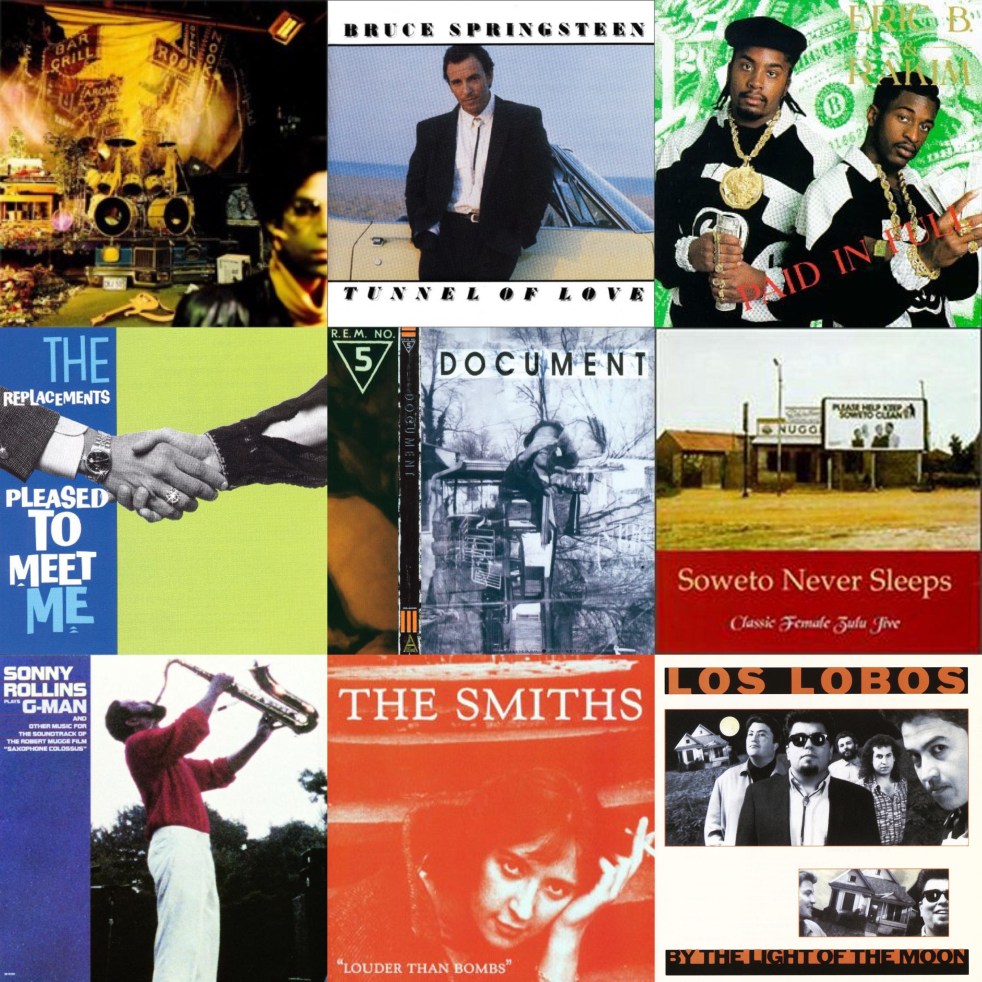
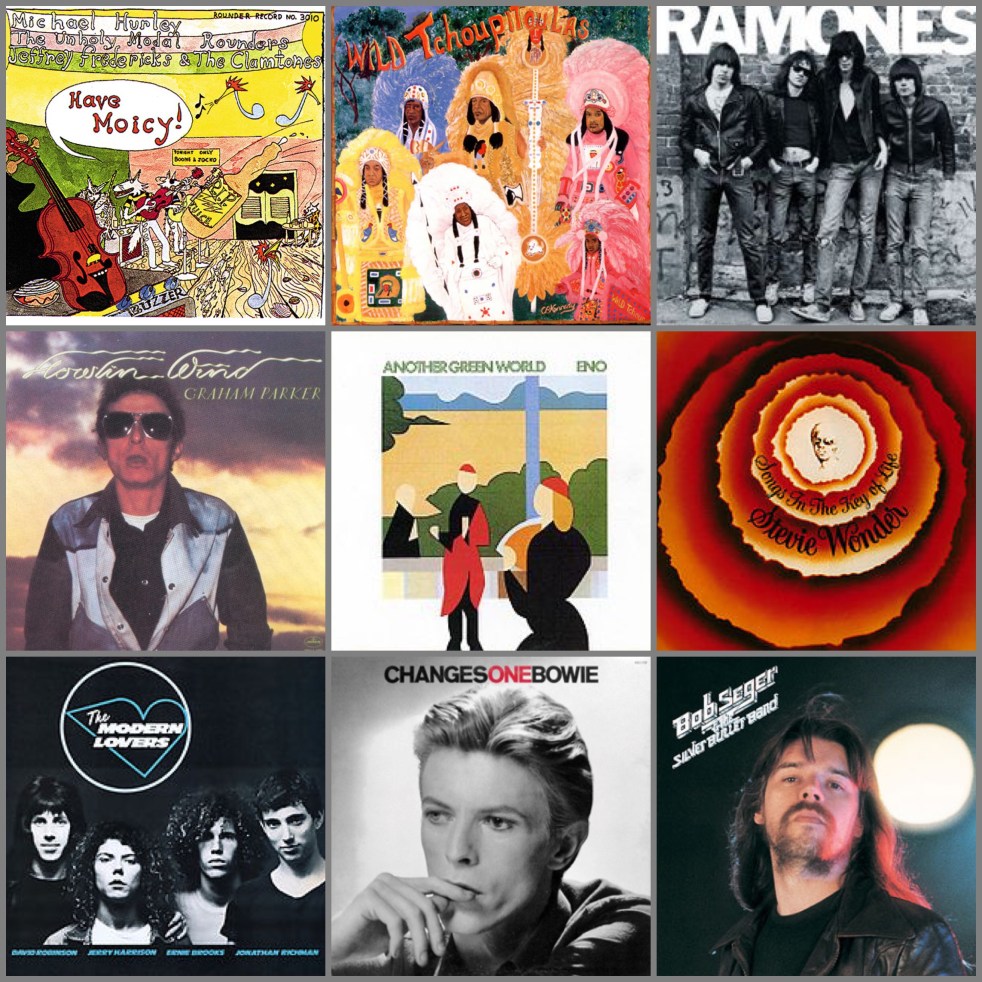
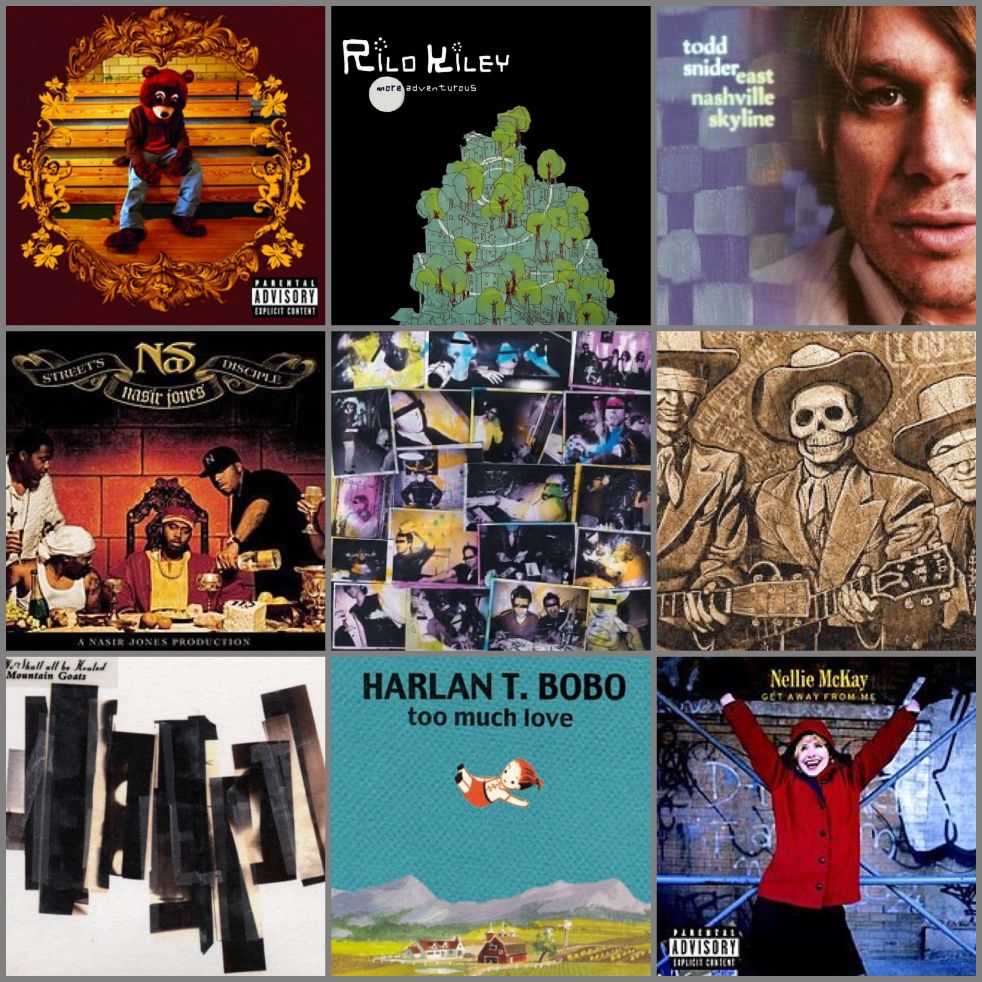
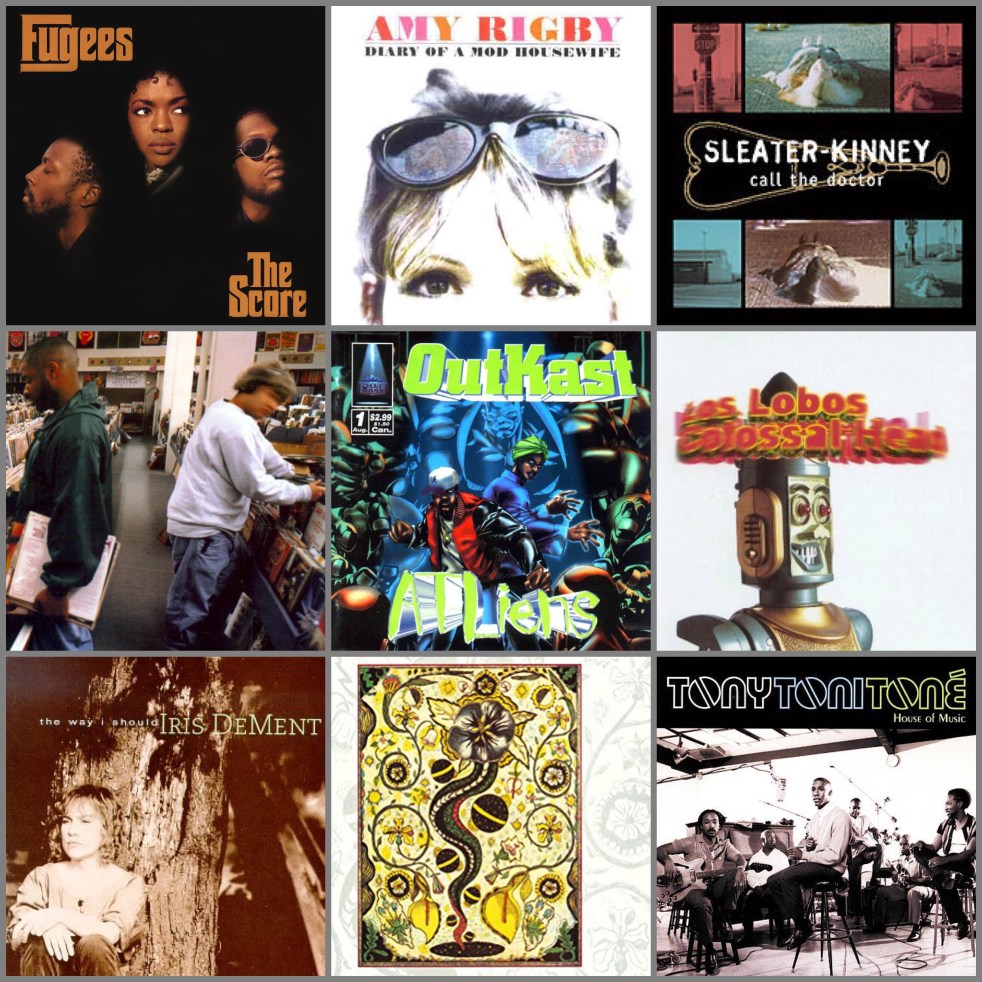

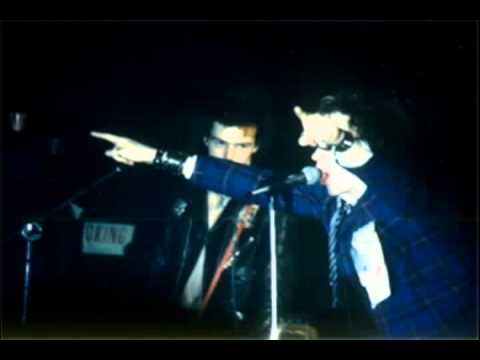

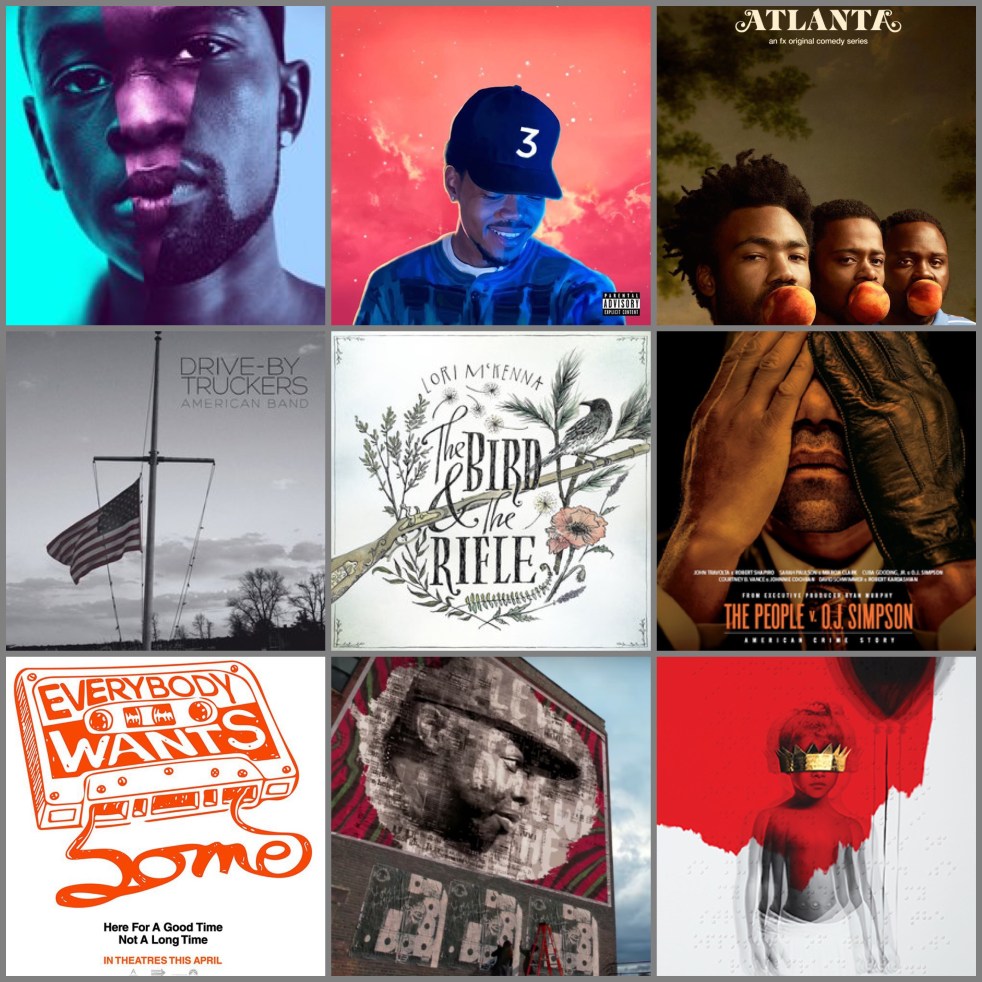

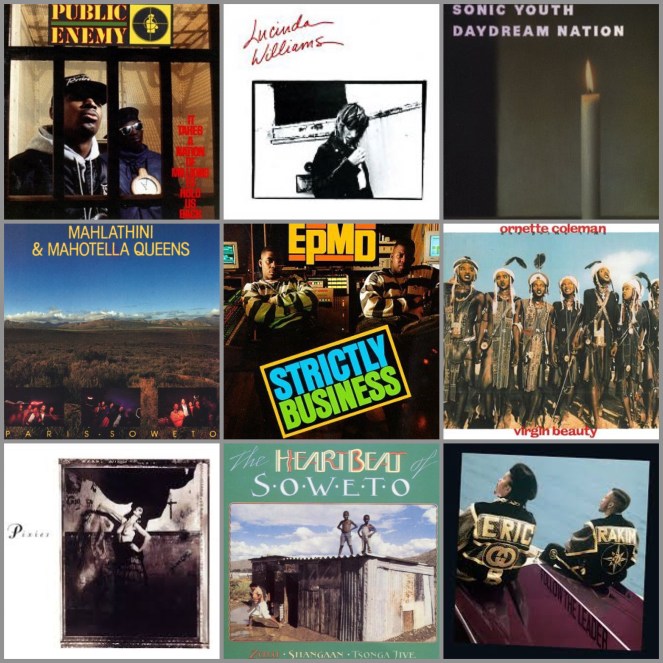
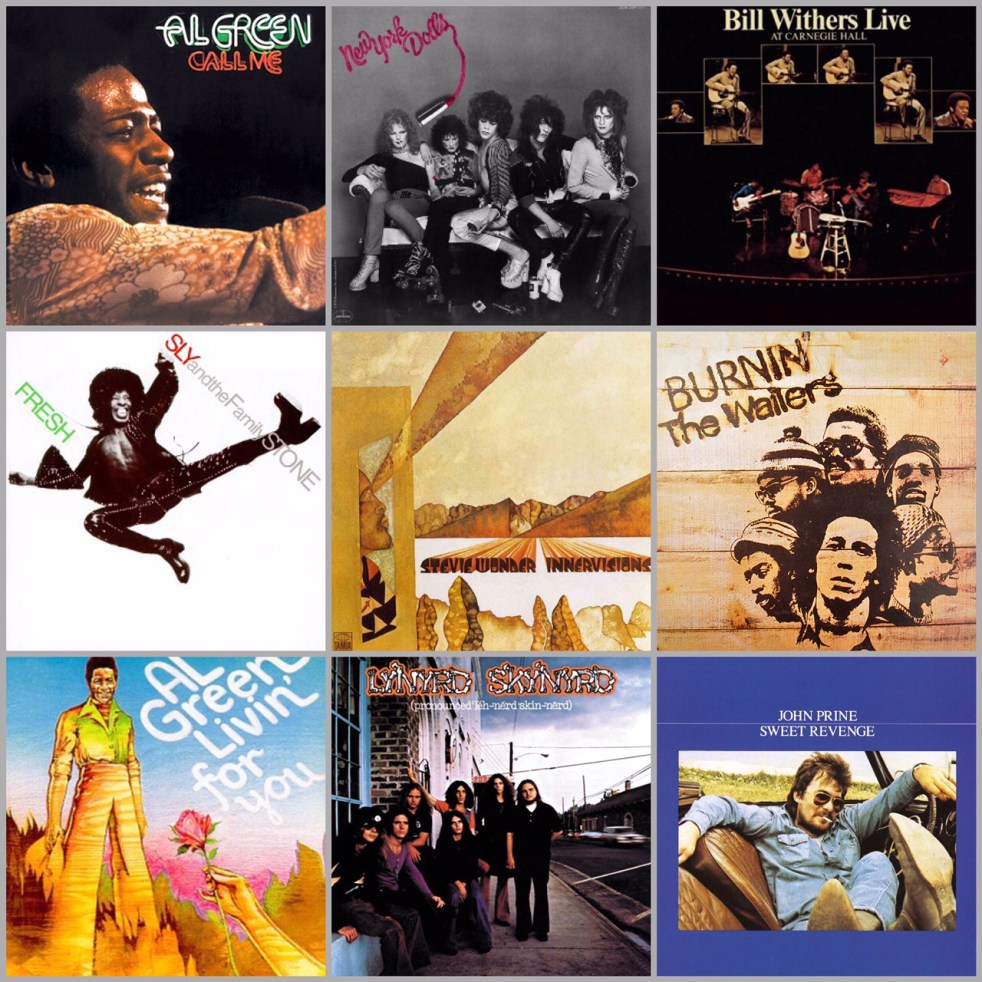

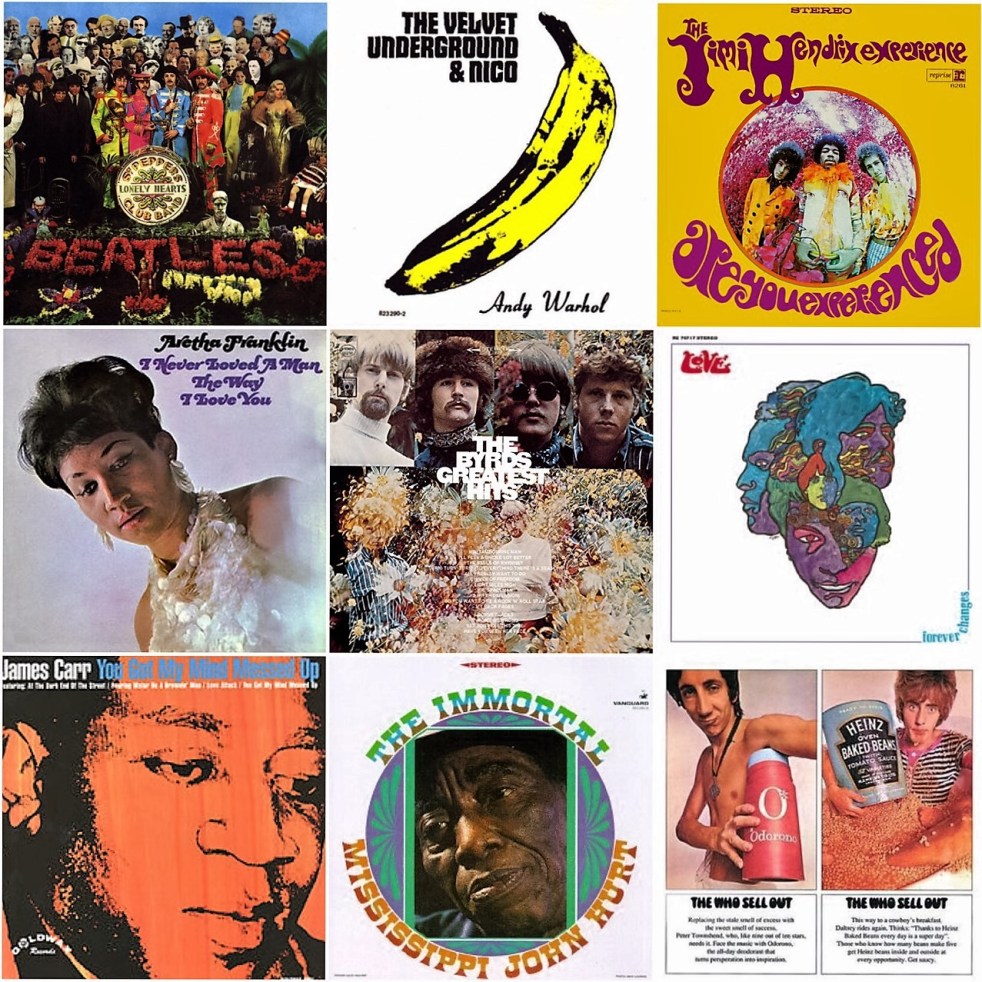
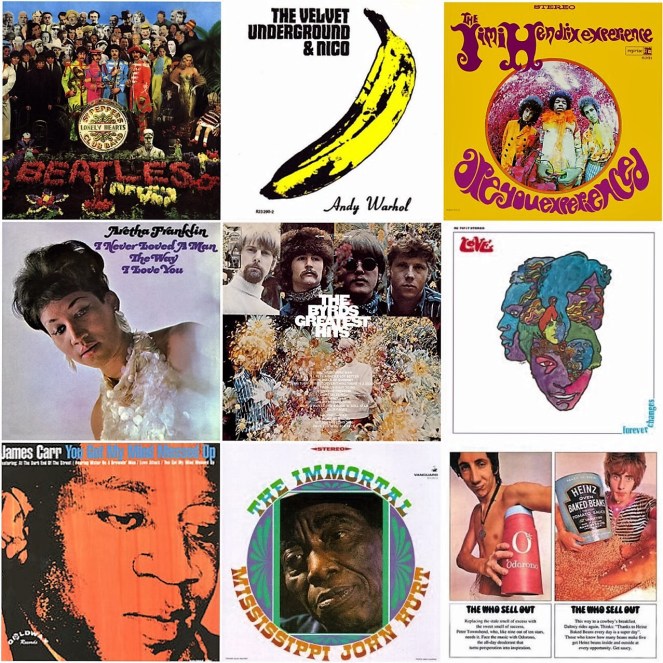
 Sing All Kinds